

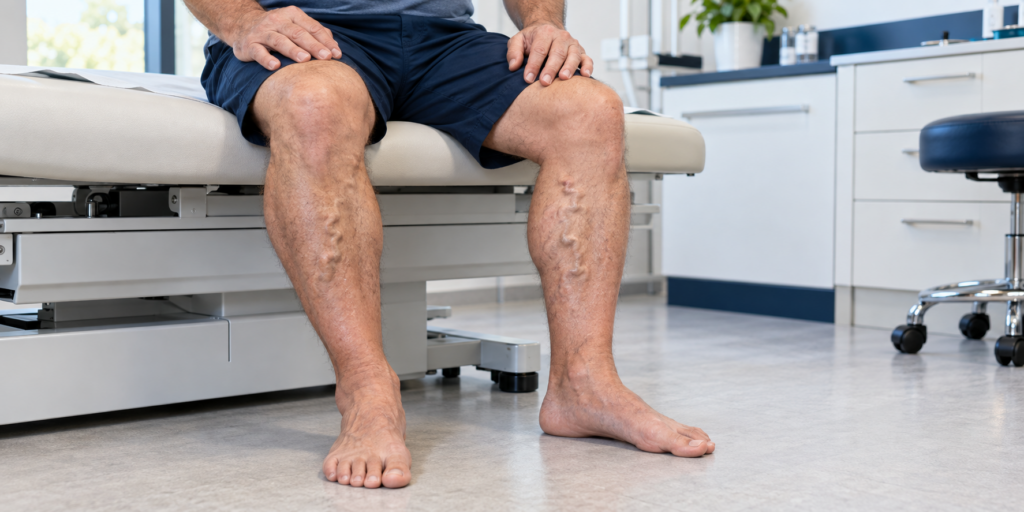
Varicose vein treatment in Reading, PA may address both legs during one visit or through separate procedures. The choice depends on findings in each leg, the treatment proposed, your health, recovery needs, and insurance authorization. Start with an evaluation of both legs and ask for a plan that explains the order of treatment, expected visits, and follow-up.
Two legs can look similar yet need different care. The question worth asking is: Does each leg need the same treatment – and what supports that recommendation?
1. Describe Each Leg Separately
Before visiting the MVM Health Reading clinic, make two short symptom lists: one for your right leg and one for your left.
Record where you notice aching, heaviness, swelling, itching, or visible veins. Note when symptoms appear and what they interrupt: standing through a shift, walking through a store, driving home, or sleeping comfortably.
Bring previous ultrasound reports and details of earlier vein treatment. Include your medication list, any blood-clot history, and whether compression stockings helped.
For someone searching “varicose veins near me,” location matters beyond the first appointment. Ask where the evaluation, procedures, and follow-up visits will take place before arranging time away from work.
2. Ask What the Evaluation Shows in Each Leg
A vein evaluation in Reading should help connect your symptoms with findings rather than treating both legs as interchangeable.
Duplex ultrasound can identify abnormal backward blood flow, called reflux, and help guide treatment. NICE guidance on varicose vein assessment explains how ultrasound helps locate damaged valves and why treatment benefits and possible side effects should be discussed. NICE
Ask your clinician:
- Which veins are affected in my right leg and left leg?
- Do the findings explain the symptoms on each side?
- Is treatment recommended for both legs now?
- Could another condition contribute to the discomfort?
For background on the condition itself, read MVM Health’s varicose veins overview. Use the consultation to move from general information to decisions about your own legs.
3. Discuss Which Leg to Treat First
The leg with the largest visible vein is not automatically the one that needs treatment first. Ask how symptoms, examination findings, ultrasound results, and your medical history influence the order.

You might describe the left leg as more noticeable but the right leg as more limiting during your workday. That difference belongs in the discussion.
If separate procedures are recommended, ask why that sequence suits your situation and what would change it. Before leaving, confirm:
- Which leg and vein are scheduled first.
- What the first procedure aims to improve.
- How the second leg will be managed while you wait.
- When the plan will be reassessed.
- There is no need to guess the interval between procedures. Ask your treating clinician for the proposed timing and the reason behind it.
4. Plan Varicose Vein Treatment in Reading, PA Around Both Legs
Same-day treatment may mean fewer procedure days to arrange. Separate appointments distribute treatment across visits. Neither approach should be chosen solely because it sounds more convenient.
MVM Health’s Reading radiofrequency ablation guide addresses treating both legs and explains that the decision depends on disease extent, health, authorization, and the treating specialist’s protocol.
Ask whether the recommendation involves the same procedure on both sides. Also clarify whether treatment addresses the underlying refluxing vein, visible surface branches, or both.
One appointment does not necessarily mean the entire treatment plan is complete. Ask which procedures, checks, and possible additional sessions are included before comparing schedules.
5. Match Recovery Instructions to Your Reading Workday
“Back to normal activity” is too vague to organize a workweek around. Describe what your day actually requires.

A warehouse shift involving lifting, a retail shift spent standing, and an office day with a long seated commute need different practical questions. Ask about walking, driving, lifting, exercise, compression, and breaks for your specific procedure.
If both legs are treated together, discuss how you will manage stairs, errands, childcare, and getting home. If treatment is separated, ask how recovery from the first procedure could affect the second appointment.
Request written instructions rather than assuming another patient’s recovery timetable applies to you. Include planned travel and commitments that cannot easily be moved.
6. Check Insurance for the Complete Plan
Before agreeing to dates, ask for an estimate covering the proposed care for both legs.
Confirm whether authorization applies to each leg and each procedure. Ask about ultrasound charges, follow-up appointments, deductibles, coinsurance, and any additional treatment for visible veins.
Questions worth taking to the scheduling or billing team include:
- Has my insurer authorized everything currently proposed?
- Could separate appointments change my estimated costs?
- Are any parts considered cosmetic?
- What happens if the treatment plan changes after reassessment?
Keep a copy of the estimate and authorization information. An estimate helps you plan; it should not be treated as a guarantee of the final insurer payment.
7. Know Who Will Manage Both Legs
Review MVM Health’s provider team and ask who will evaluate you, perform treatment, and review follow-up findings. The Ali Amin, MD provider profile lists vascular surgery qualifications; confirm appointment availability at Reading.
Book a Consultation at MVM Health in Reading, PA
Book a consultation at MVM Health in Reading, PA and specify Reading when submitting your request. Ask for a plan covering both legs before committing to procedure dates.
Bring your two symptom lists, previous reports, and scheduling questions. MVM Health’s Reading office is at 3933 Perkiomen Ave, Suite 101A, Reading, PA 19606.