
If you’re looking for a vein doctor in Bethlehem, PA, you’re probably dealing with one of a few things. Maybe you have visible varicose or spider veins. Maybe your legs ache or swell by the end of the day. Or maybe you’ve already heard a term like “venous insufficiency” and want it explained in plain language.
This guide covers all of it in one place:
- What a vein doctor actually does
- Which conditions we diagnose and treat at MVM Health’s Bethlehem office
- How the evaluation and treatment process works, step by step
- What recovery looks like
- How to get started
A vein doctor, or vein specialist, focuses on diagnosing and treating problems with the venous system the vessels that carry blood from your legs back to your heart. When the valves inside those veins weaken, blood pools instead of flowing efficiently. That pooling is the root cause behind almost everything covered below, from visible bulging veins to the daily heaviness and swelling many patients live with for years before ever seeking treatment.
What Does a Vein Doctor in Bethlehem, PA Do?
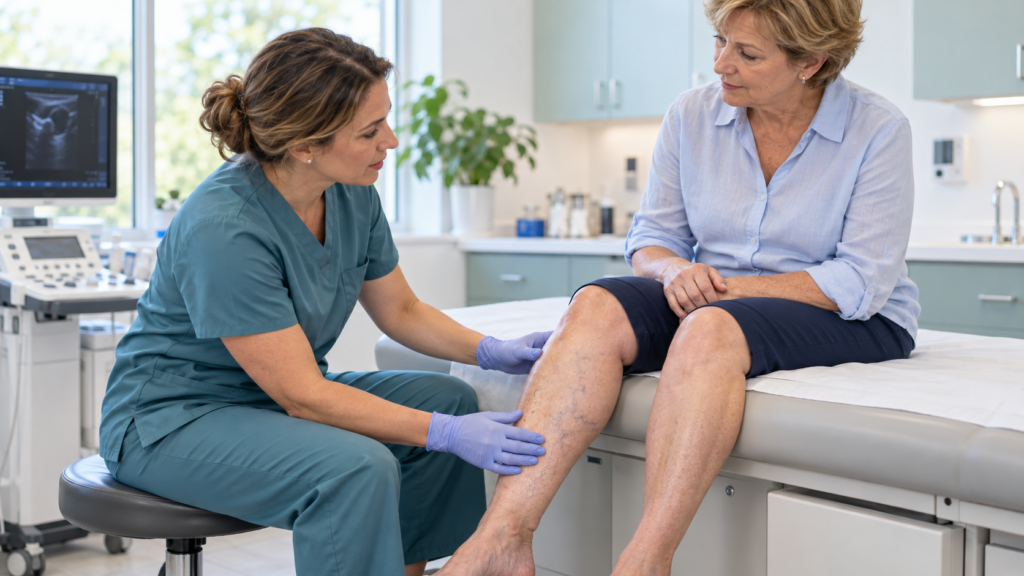
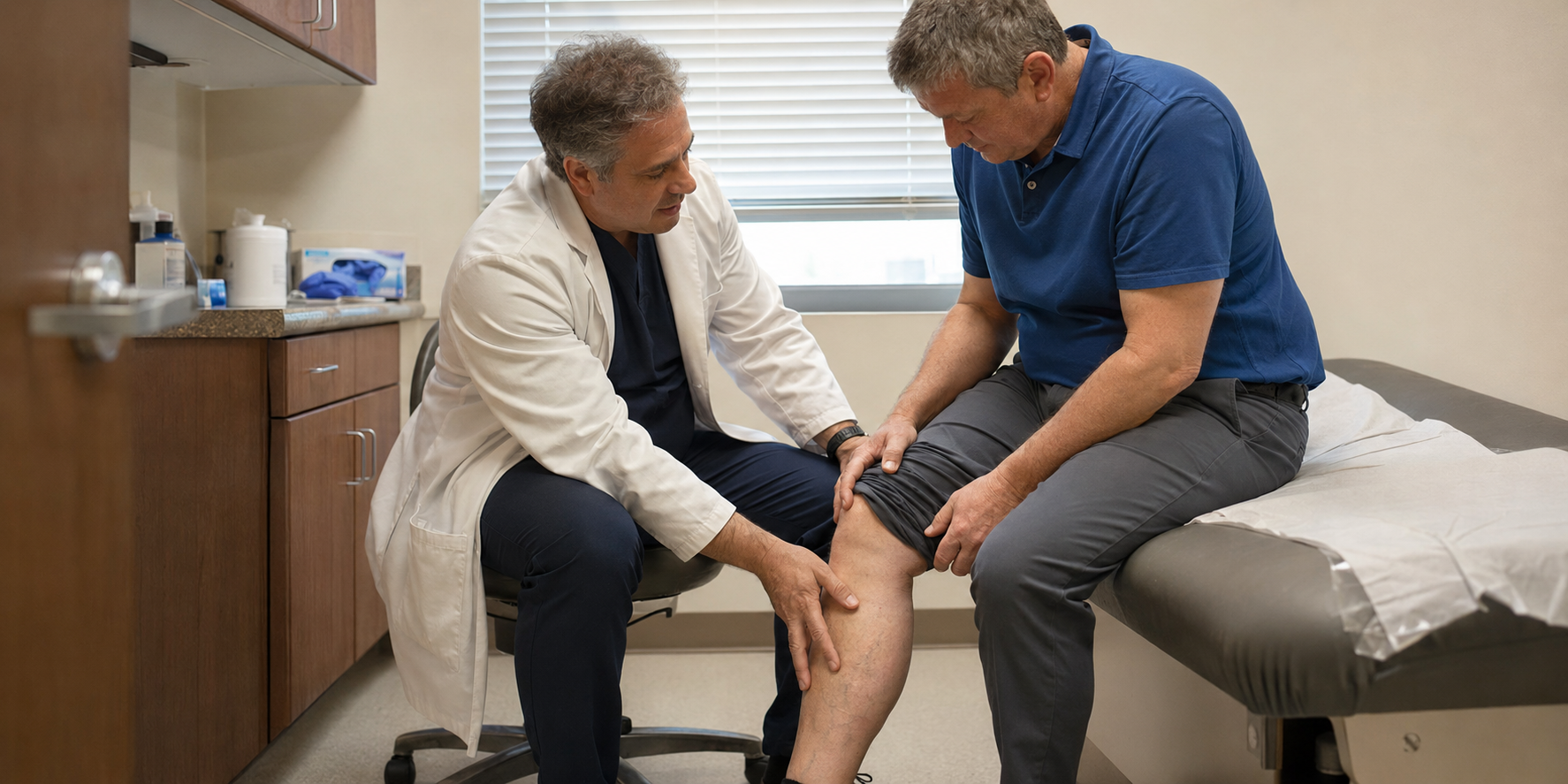
At MVM Health’s Bethlehem office, a vein evaluation starts simply. Your provider talks through your symptoms and history, then performs a physical exam of the legs.
In most cases, your provider will also order a duplex ultrasound. This is a painless imaging test that shows blood flow in real time and identifies exactly which veins have faulty valves a condition called venous reflux.
That ultrasound result matters for two reasons:
- It turns a list of symptoms into a confirmed diagnosis
- It’s what most insurance plans require before approving treatment as medically necessary
From there, your vein doctor builds a treatment plan matched to your specific anatomy and goals, rather than defaulting to a single one-size-fits-all procedure.
Signs You May Need a Vein Evaluation
Vein disease usually develops gradually, so many patients don’t connect their symptoms to their veins right away. Common signs worth having evaluated include:
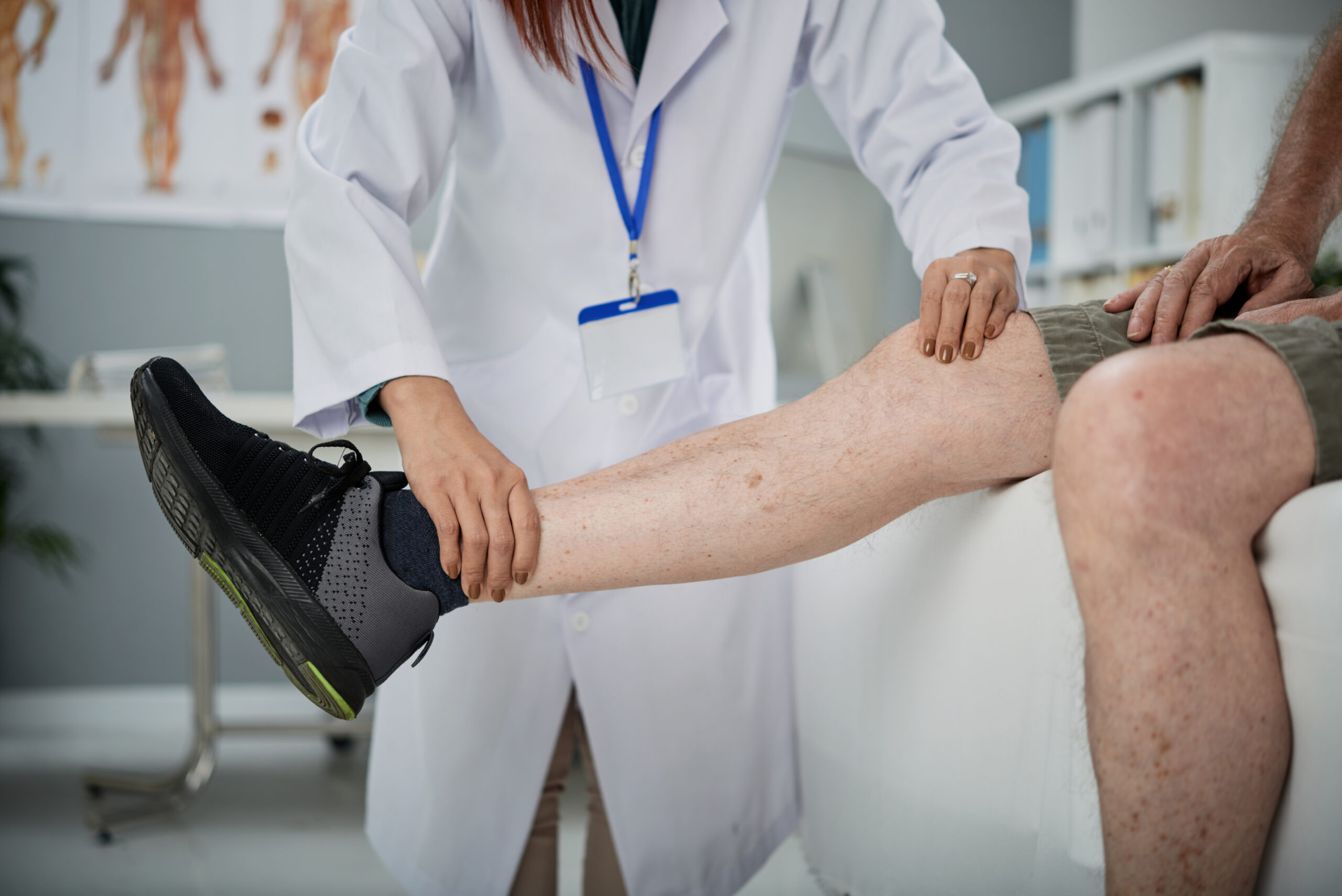
- Legs that swell noticeably more by evening than in the morning
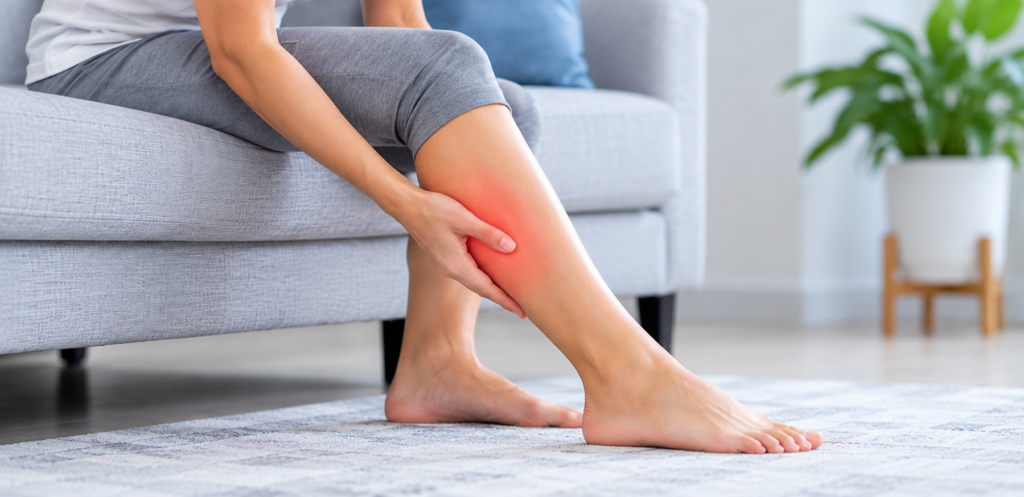
- A heavy, aching, or tired feeling in the legs after a normal day
- Visible bulging, rope-like, or web-patterned veins
- Restless or uncomfortable legs at night
- Itchy, burning, or discolored skin near a vein
- A sore near the ankle that’s slow to heal
Any one of these on its own doesn’t necessarily mean a serious problem. But if you’re noticing several together or symptoms have been getting worse over months rather than staying the same that’s a good reason to schedule an evaluation rather than wait.
Common Vein Conditions We Diagnose in Bethlehem
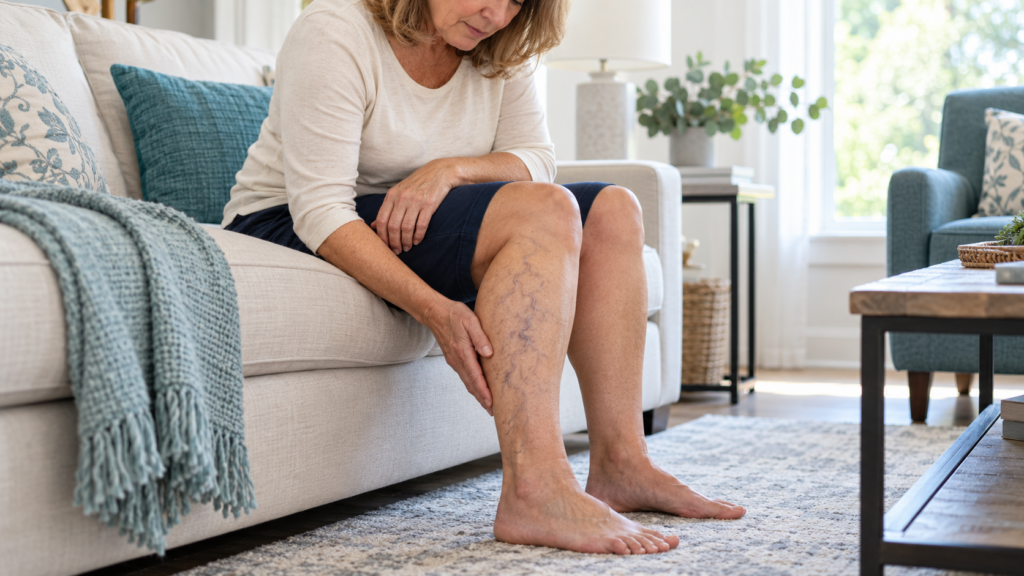
Varicose veins are enlarged, twisted veins visible just under the skin. They’re caused by weakened valves that let blood flow backward and pool.
Beyond appearance, varicose veins often cause:
- Aching and throbbing that worsens through the day
- A heavy or tired feeling in the legs by evening
- Gradual progression over time becoming larger, more numerous, or leading to skin changes near the ankle if untreated
Learn more on our varicose veins condition page.
Spider veins are smaller, web-like veins closer to the skin’s surface, typically red, blue, or purple in color. They’re frequently viewed as purely cosmetic. But they can also signal underlying venous insufficiency, especially when they appear:
- In clusters
- On the inner thigh or ankle
- Alongside aching and heaviness
See our spider veins condition page for more detail.
Chronic venous insufficiency (CVI) is the broader disease process behind most varicose veins. It’s a progressive condition where faulty valves let blood pool instead of returning efficiently to the heart.
Without treatment, CVI tends to worsen over time potentially advancing from mild swelling and heaviness to skin discoloration and, in more advanced cases, slow-healing wounds near the ankle. Full background is available on our venous insufficiency condition page.
Venous reflux is the specific valve failure driving both varicose veins and CVI. It’s exactly what a duplex ultrasound is designed to detect. Confirming reflux and identifying precisely which vein or veins are affected is what separates an accurate diagnosis from guesswork based on symptoms alone.
What Increases Your Risk of Vein Disease?
Understanding your own risk factors can help you decide how soon to schedule an evaluation. The most common contributors include:
- Family history: if a parent or sibling has had varicose veins, your own risk is meaningfully higher, since vein wall and valve strength is largely inherited
- Prolonged standing or sitting : especially relevant for many Bethlehem-area workers in warehouse, logistics, healthcare, and retail roles where long shifts leave little chance to sit down or elevate the legs
- Age : vein walls and valves naturally lose some strength over time
- Pregnancy: temporarily raises pressure on the pelvic and leg veins and increases hormone levels that relax vein walls, which is why many women first notice varicose veins during or after pregnancy
- Carrying excess weight: adds sustained pressure on the leg veins
- A sedentary lifestyle : reduces the calf-muscle pumping action that normally helps push blood back toward the heart
- A previous blood clot : can permanently damage vein valves, leaving a lasting risk of chronic venous insufficiency even after the clot itself resolves
None of these factors guarantee you’ll develop vein disease, and having none of them doesn’t rule it out. But if several apply to you alongside the symptoms above, it’s a reasonable signal to prioritize an evaluation.
How Diagnosis Works
- Consultation : a discussion of your symptoms, how long you’ve had them, and any family history (varicose veins are often hereditary)
- Physical exam : a visual and hands-on check of the legs
- Duplex ultrasound : imaging that confirms reflux and pinpoints which veins are affected
- Treatment plan: a recommendation built around your ultrasound findings, symptoms, and insurance coverage
How to Prepare for Your First Visit
A little preparation can make your first vein evaluation more useful. Before your appointment:
- Bring a list of your current medications
- Note when your symptoms started and whether they’ve changed over time
- Wear or bring shorts so your provider can easily examine your legs
- Know whether any close family members have had varicose veins or vein disease
- Mention any prior leg imaging, blood clots, or vein procedures upfront
This helps your provider build the most accurate picture of your vein health from the start.
Treatment Options at a Glance
Bethlehem patients typically have several proven, minimally invasive treatment options. Each is suited to a different vein type or severity, and your provider will recommend the right combination based on your diagnostic ultrasound.
| Treatment | Best suited for | Learn more |
| Radiofrequency ablation (RFA) | Larger veins with confirmed reflux | RFA treatment page |
| VenaSeal | Reflux veins where a stocking-free recovery is preferred | VenaSeal treatment page |
| Sclerotherapy | Spider veins and smaller surface veins | Sclerotherapy treatment page |
| Laser ablation | Fine spider veins, needle-free option | Laser ablation treatment page |
| ClariVein | Larger veins where a heat-free method is preferred | ClariVein treatment page |
| Ambulatory phlebectomy | Larger surface veins needing physical removal | Ambulatory phlebectomy treatment page |
You can browse the full list of procedures on our treatments hub.
What to Expect During Recovery
Modern vein treatment disrupts daily life far less than older surgical approaches. Most patients treated with RFA, VenaSeal, sclerotherapy, ClariVein, or laser ablation return to normal, non-strenuous activity the same day.
A few things to expect:
- Walking is encouraged right away: it actually supports circulation
- Compression stockings may be recommended for a period of days to weeks, depending on the procedure
- Intense exercise or heavy lifting is usually paused briefly while the treated vein fully seals
- Symptom relief less heaviness, less swelling is often noticeable within days
- Visible fading of the treated vein typically takes several weeks to a few months as your body naturally reabsorbs it
- Most veins need only one session, though spider vein treatment with sclerotherapy or laser often involves more than one session spaced several weeks apart
Insurance and Cost
Treatment is generally considered medically necessary and typically covered by insurance, including Medicare when a duplex ultrasound confirms venous reflux alongside documented symptoms like pain, swelling, or skin changes.
A few things worth knowing:
- Purely cosmetic spider vein treatment without an underlying medical finding is less likely to be covered
- It’s common for one patient to have some treatment covered by insurance (the reflux vein) while a separate cosmetic touch-up (surface spider veins) is billed separately
- Our Bethlehem team verifies your specific coverage before treatment begins
- We explain any out-of-pocket costs in advance and work directly with your insurance provider, so there are no surprise bills
See our insurance and payment page for general details on accepted plans.
Meet Your Bethlehem Vein Care Team
MVM Health’s Bethlehem providers are trained specifically in the diagnosis and minimally invasive treatment of venous disease. Every treatment plan is reviewed as part of our collaborative care model. Full physician credentials, training, and profiles are available on our providers page.
Why Bethlehem Patients Choose MVM Health
Bethlehem sits at the center of the Lehigh Valley a region shaped by its industrial past and its present-day mix of healthcare, logistics, and manufacturing employers.
Book Your Vein Evaluation at the Bethlehem Office
If any of these symptoms sound familiar, the next step is a real evaluation, not guesswork. Schedule your vein evaluation or visit our Bethlehem location page for hours, directions, and contact details.
Many local patients spend long shifts on their feet or behind the wheel:
- Working in one of the area’s large distribution and warehouse facilities
- Commuting along Route 22 or Route 78
- Working in healthcare and retail throughout the Lehigh Valley
That kind of daily strain is exactly what accelerates venous reflux over time. Our Bethlehem team builds treatment plans around real schedules, not just textbook cases, and takes the time to explain what’s actually happening in your veins before recommending a course of treatment.
We also believe good vein care shouldn’t require guesswork about cost. Before any treatment begins, our team verifies your insurance coverage and walks you through exactly what to expect financially.
Find our hours, address, and directions on our Bethlehem location page, and explore all Pennsylvania locations on our state locations page.
Warning Signs You Shouldn’t Ignore
Most vein disease progresses slowly. But a few signs call for prompt attention rather than a routine visit:
- Sudden, significant swelling in one leg especially with pain or warmth
- A leg that’s red, hot, and tender to the touch
- An open sore near the ankle that isn’t healing
These can point to a blood clot or an advanced complication and should be evaluated quickly rather than waiting for your next scheduled appointment. When in doubt, it’s always better to call and ask than to wait and see if a symptom resolves on its own.