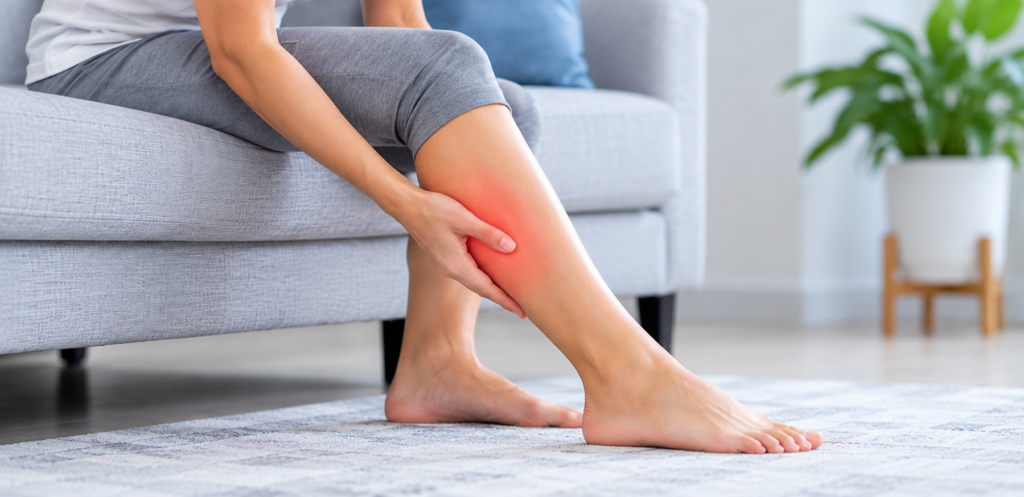

A visit to a vein doctor in Bloomfield is often prompted by leg swelling, aching, heaviness, visible varicose veins, spider veins, or skin changes that may signal venous insufficiency. Diagnosis may include a physical examination and duplex ultrasound. Treatment is then selected according to the affected veins, blood-flow findings, symptoms, medical history, and the patient’s goals.
MVM Health provides vein care at its Bloomfield, New Jersey location, including evaluations for varicose veins, spider veins, venous reflux, leg swelling, and related concerns. Available treatment options may include sclerotherapy, radiofrequency ablation, laser ablation, VenaSeal, ClariVein, and ambulatory phlebectomy.
What Conditions Does a Vein Doctor Treat?
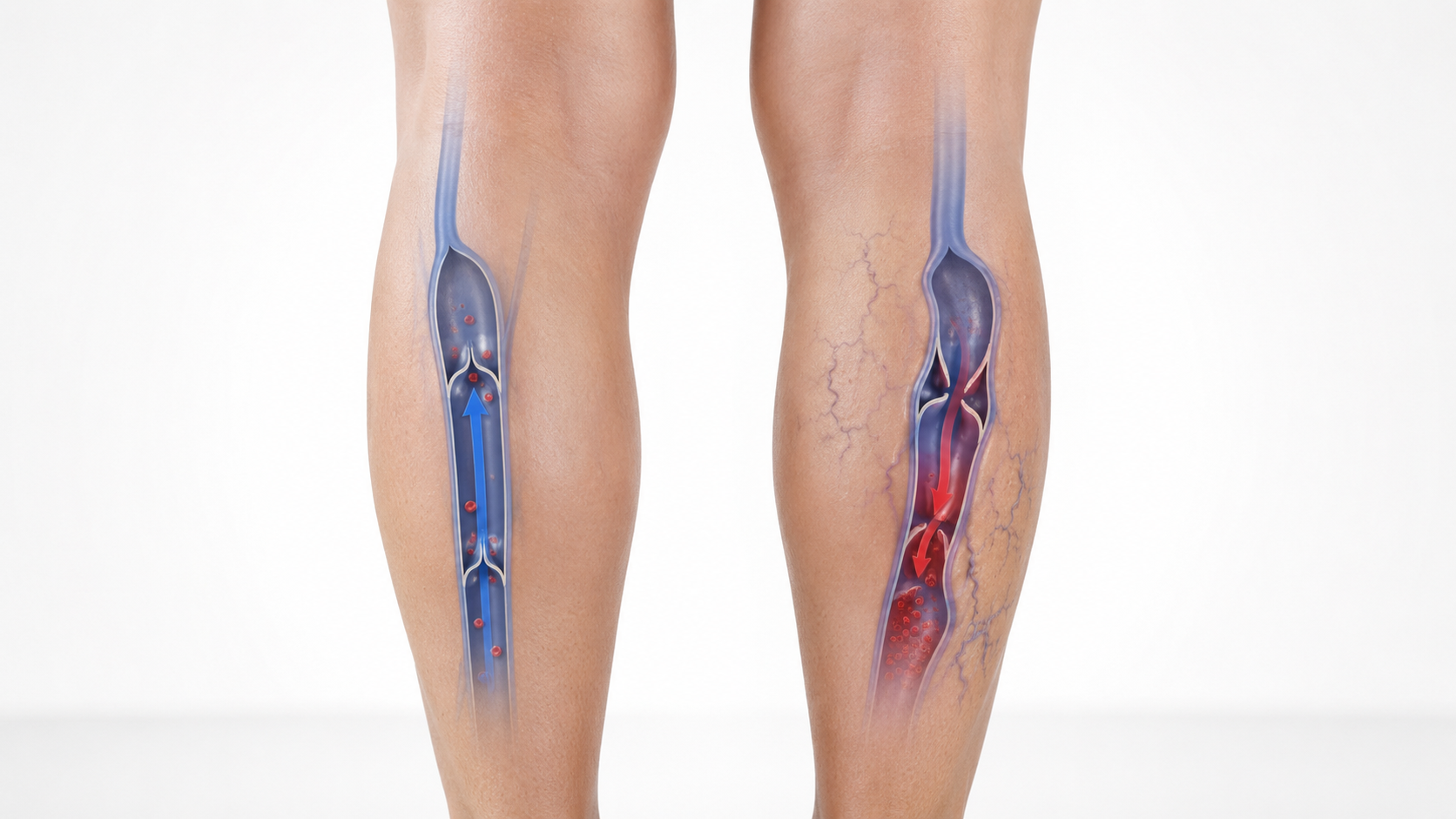
A vein doctor evaluates problems affecting the veins that return blood toward the heart. In the legs, this process must work against gravity. One-way valves inside healthy veins help keep blood moving upward instead of falling back toward the feet.
When a valve or vein wall becomes weak, blood may begin flowing backward. This is known as venous reflux. Blood can then collect inside the affected vein, increasing pressure and causing the vein to enlarge.
A vein specialist may evaluate and treat:
- Varicose veins
- Spider veins
- Reticular veins
- Chronic venous insufficiency
- Venous reflux disease
- Leg swelling
- Aching or heavy legs
- Nighttime leg cramping
- Skin discoloration around the ankles
- Inflammation in a superficial vein
- Venous leg ulcers
- Recurrent veins following earlier treatment
Different conditions can produce similar symptoms. Leg swelling, for example, may be connected to veins, medications, lymphatic disorders, heart or kidney problems, injury, or prolonged inactivity. A medical evaluation is needed to identify the likely cause.
Are Varicose Veins Just a Cosmetic Issue-or a Medical One?
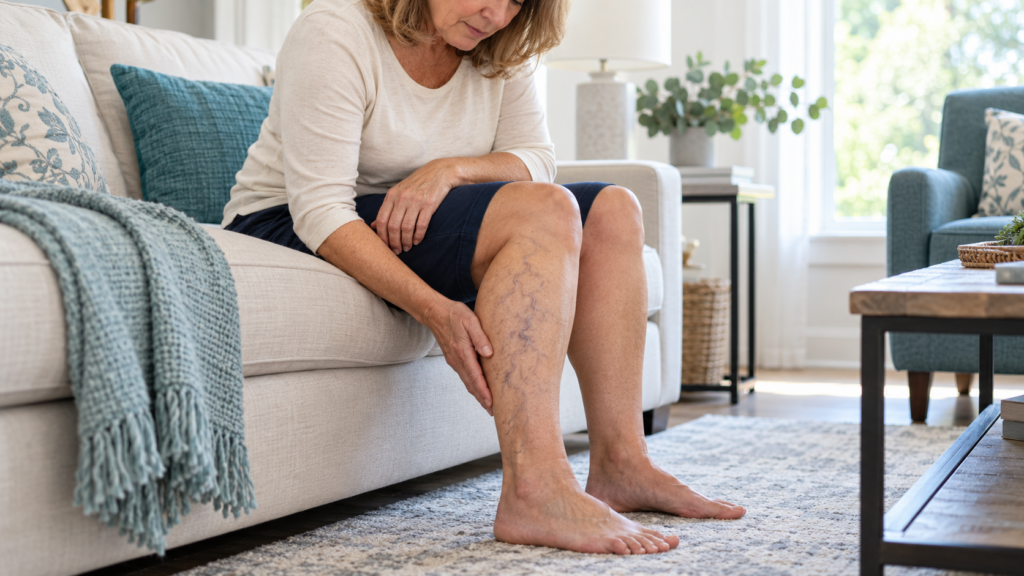
Varicose veins are not always just a cosmetic concern. Some people have visible veins without pain or circulation-related symptoms. Others develop aching, swelling, heaviness, itching, cramping, skin changes, or wounds because the veins are not moving blood efficiently.
Varicose veins are typically enlarged, twisted vessels that appear blue, purple, or raised beneath the skin. They commonly develop when damaged valves allow blood to pool inside superficial veins.
The National Heart, Lung, and Blood Institute identifies age, pregnancy, excess weight, prolonged sitting or standing, inactivity, and family history as factors that can increase the likelihood of developing varicose veins.
Spider veins are smaller red, blue, or purple vessels located close to the skin. Although many spider veins are cosmetic, extensive or recurrent spider veins may be connected to a larger underlying vein problem.
Before beginning spider vein treatment, a clinician may need to determine whether venous reflux is supplying pressure to the visible surface veins. Treating only the surface without identifying a deeper source can lead to incomplete improvement or the appearance of new veins.
What Symptoms Could Signal Vein Disease?
Visible veins are one sign, but vein disease can develop before prominent varicose veins appear.
Symptoms that may justify an evaluation include:
- Bulging or twisted leg veins
- Clusters of spider veins
- Leg aching or throbbing
- Heaviness or fatigue
- Swelling around the lower legs or ankles
- Burning, itching, or tingling near visible veins
- Nighttime cramps
- Restless or uncomfortable legs
- Pain that increases after standing
- Symptoms that become worse later in the day
- Symptoms that improve after elevating the legs
- Brown or reddish skin discoloration
- Hardened or irritated skin around the ankles
- A slow-healing sore on the lower leg
- Bleeding from a surface vein
Symptoms of chronic venous disease often become more noticeable after long periods of sitting or standing. This can be relevant for Bloomfield residents whose jobs involve retail, healthcare, education, office work, driving, or other activities that limit regular movement during the day.
Symptoms alone cannot confirm venous insufficiency. Nerve problems, arthritis, arterial disease, muscle injuries, and other conditions can cause similar discomfort.
When Do Leg Symptoms Need Urgent Medical Attention?
Most varicose and spider veins can be evaluated during a scheduled office visit. Certain symptoms require prompt or emergency medical attention.
Seek urgent medical care for:
- Sudden swelling in one leg
- New warmth, redness, or marked tenderness
- Rapidly worsening leg pain
- Uncontrolled bleeding from a vein
- A wound with spreading redness, drainage, or fever
- Sudden shortness of breath
- Chest pain
- Coughing up blood
- Fainting or severe dizziness
Sudden swelling, warmth, and tenderness may indicate deep vein thrombosis. Chest pain or difficulty breathing may signal that a clot has traveled to the lungs. These symptoms should not wait for a routine vein clinic appointment.
How Is Vein Disease Diagnosed in Bloomfield?
A vein evaluation should identify the cause and location of the problem before a treatment is recommended.
Medical history
- The clinician may ask about:
- When the symptoms began
- Where discomfort or swelling occurs
- Whether standing makes symptoms worse
- Whether elevation provides relief
- Previous pregnancies
- Family history of vein disease
- History of blood clots
- Prior vein procedures
- Current medications
- Activity and work patterns
- Skin changes, bleeding, or wounds
This information helps determine whether the symptoms follow a venous pattern or may require evaluation for another condition.
Physical Examination
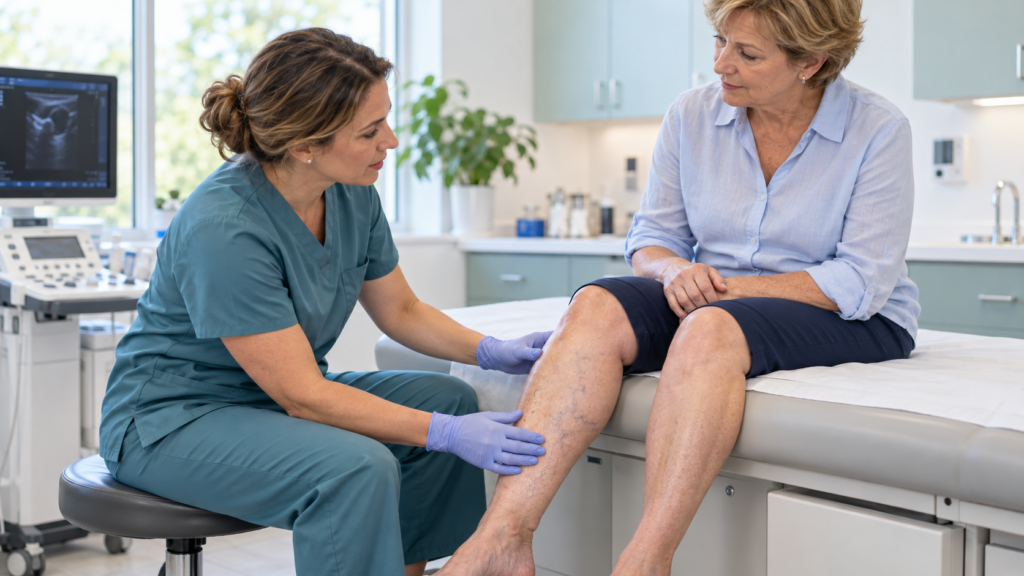
The clinician examines the legs for visible veins, swelling, tenderness, skin discoloration, inflammation, and ulcers. Some parts of the examination may be performed while the patient is standing because gravity can make refluxing veins more visible.
Duplex Venous Ultrasound
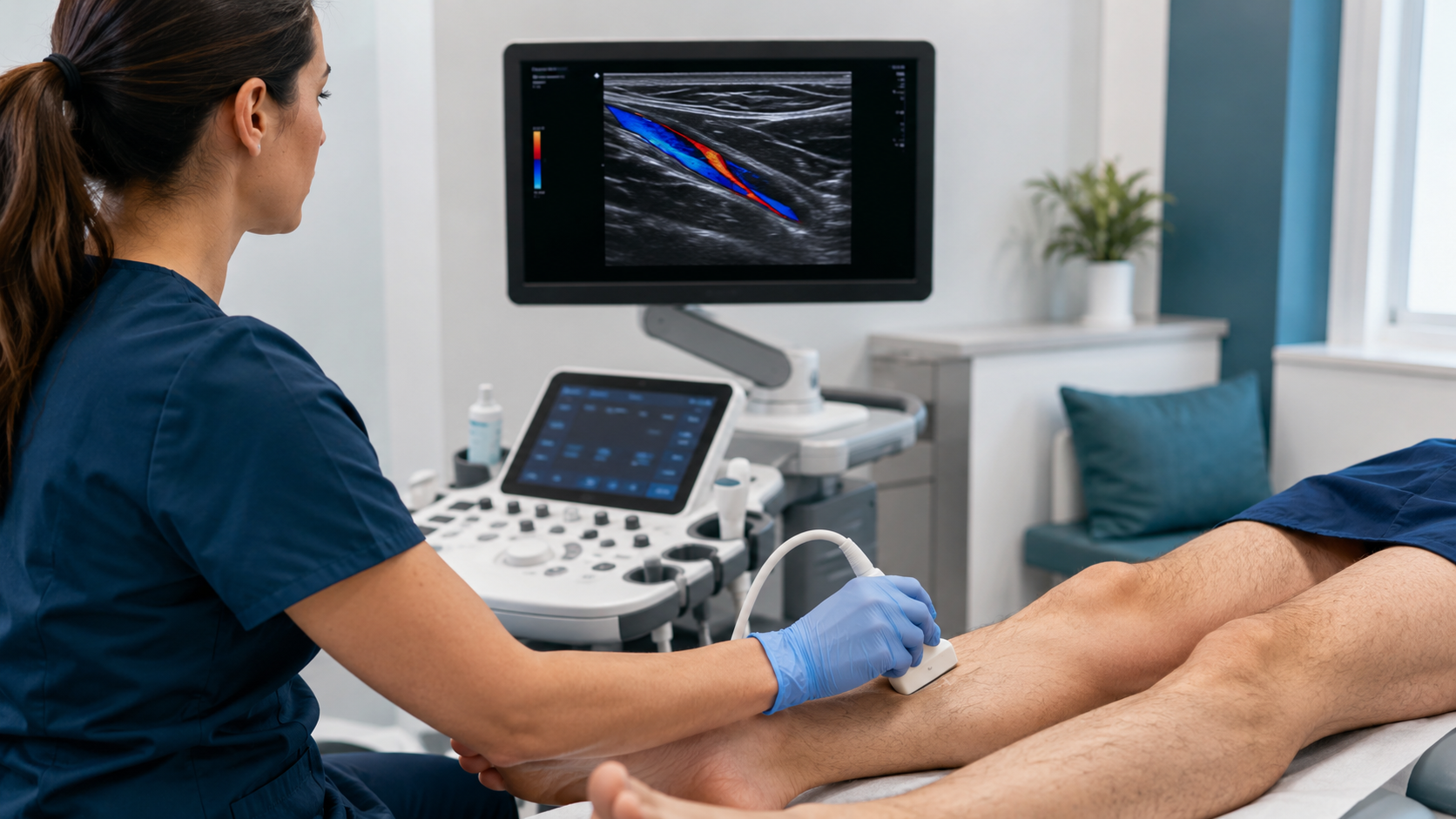
A duplex ultrasound combines conventional ultrasound imaging with Doppler measurements of blood flow. It may show:
- Which veins contain backward blood flow
- Where a valve is malfunctioning
- Whether a larger vein is feeding visible branches
- Vein diameter and anatomy
- Signs of obstruction or a blood clot
- Whether a vein is suitable for a particular treatment
Venous ultrasound is noninvasive and does not use ionizing radiation. It allows the clinician to view the structure of the veins and evaluate blood movement in real time. RadiologyInfo.org explains that venous ultrasound can identify damaged valves and abnormal blood flow associated with varicose veins.
What Vein Treatment Options Does MVM Health Offer?
MVM Health lists several minimally invasive options through its vein treatment program. The correct treatment depends on the ultrasound findings, affected veins, symptoms, medical history, and individual goals.
Treatment
| Treatment | How it works | Common use |
| Sclerotherapy | A liquid or foam medication is injected to close the targeted vein | Spider veins and selected small varicose veins |
| Radiofrequency ablation | A catheter delivers controlled radiofrequency energy to close a refluxing vein | Larger superficial veins with venous reflux |
| Laser ablation | Laser energy delivered through a catheter closes a malfunctioning vein | Selected refluxing saphenous veins |
| VenaSeal | Medical adhesive seals the diseased vein | Selected superficial veins with reflux |
| ClariVein | A rotating catheter and sclerosant close the vein without thermal energy | Selected veins with venous insufficiency |
| Ambulatory phlebectomy | Bulging surface veins are removed through small skin openings | Prominent tributary varicose veins |
How Does Sclerotherapy Treat Spider Veins?
Sclerotherapy involves injecting a medication into the targeted vein. The medication irritates the inside of the vessel, causing it to close. Blood is redirected through other functioning veins, while the treated vessel gradually fades.
Sclerotherapy is commonly used for spider veins and selected small varicose veins. Multiple sessions may be needed when veins cover a larger area.
How Does Radiofrequency Ablation Close a Diseased Vein?
Radiofrequency ablation uses controlled heat to close a vein affected by reflux. A thin catheter is placed inside the vein with ultrasound guidance. Radiofrequency energy heats the vein wall, causing it to collapse and seal.
The body then redirects blood through healthier vessels. This treatment is generally used for larger superficial veins rather than small spider veins.
How Does Laser Vein Ablation Work?
Endovenous laser treatment also uses thermal energy. A laser fiber is positioned inside the affected vein under ultrasound guidance. Energy delivered through the fiber closes the vein.
Laser ablation and radiofrequency ablation work on similar principles, but they are not identical. Vein anatomy, physician judgment, previous procedures, and patient-specific considerations influence which option is appropriate.
What is VenaSeal?
VenaSeal is a nonthermal treatment that uses a medical adhesive to close a diseased superficial vein. The physician guides a catheter through the vein and places small amounts of adhesive at specific points.
Because VenaSeal does not use thermal energy, the anesthesia and compression requirements may differ from those of laser or radiofrequency treatment. It is not suitable for every patient, and the clinician must review relevant risks, allergies, and vein anatomy.
What is ClariVein?
ClariVein combines mechanical action with a sclerosant medication. A rotating catheter contacts the inner vein wall while medication is delivered to close the vessel.
This approach does not use laser or radiofrequency heat. The treating physician determines whether the affected vein’s size, location, and anatomy make ClariVein appropriate.
When is Ambulatory Phlebectomy Used?
Ambulatory phlebectomy removes bulging veins located close to the skin through very small openings. It may be performed independently or after an underlying refluxing vein has been treated.
Closing a larger diseased vein does not always eliminate every visible branch. Phlebectomy or sclerotherapy may be used later to address remaining surface veins.
How Do Doctors Decide on the Right Treatment?
There is no single treatment that is best for every patient. A physician may consider:
- The veins affected by reflux
- Vein size and location
- Symptom severity
- Skin changes or ulcers
- Previous blood clots
- Earlier vein procedures
- Other medical conditions
- Current medications
- Cosmetic and functional goals
- Patient preference
- Insurance requirements
A treatment plan may involve more than one stage. For example, the physician may first close a larger refluxing vein and later treat remaining surface veins with sclerotherapy or ambulatory phlebectomy.
Compression stockings, walking, leg elevation, and avoiding long periods of inactivity may help manage symptoms. However, conservative measures do not repair a damaged vein valve.
Will Insurance Cover Your Vein Treatment?
Insurance coverage depends on the patient’s plan, symptoms, ultrasound findings, treatment history, and the insurer’s medical-necessity requirements.
Treatment for symptomatic venous insufficiency may be eligible for coverage when documentation supports medical necessity. Treatment performed only to improve the appearance of spider veins is commonly treated as cosmetic.
Do not assume that a procedure is covered because it is minimally invasive or recommended by a clinician. MVM Health can request benefit information, but the insurance company makes the final coverage determination.
What to Expect During a Minimally Invasive Vein Procedure
The exact process varies by treatment, but a typical appointment may include:
- Reviewing the treatment plan and consent
- Marking or imaging the target vein
- Cleaning the treatment area
- Applying local anesthetic when required
- Accessing or injecting the affected vein
- Using ultrasound guidance when appropriate
- Applying a dressing or compression garment
- Providing recovery instructions
- Scheduling follow-up care
Many modern procedures are performed in an outpatient setting. Patients are commonly encouraged to walk afterward because regular movement supports circulation and avoids prolonged inactivity.
The vein being treated is already functioning poorly. Closing it allows blood to use other veins that are better able to return blood toward the heart.
What Does Recovery Look Like After Vein Treatment?
Recovery depends on the procedure, the number of veins treated, the patient’s health, and the physician’s instructions.
- Temporary effects may include:
- Bruising
- Tenderness
- Mild swelling
- Redness
- Tightness along the treated vein
- Temporary skin discoloration
- Small firm areas beneath the skin
- Irritation from compression garments
Many patients return to light daily activities relatively quickly. That does not mean every procedure has zero downtime or that every patient follows the same recovery schedule.
The clinician may recommend:
- Regular walking
- Temporary compression
- Avoiding prolonged sitting
- Limiting heavy lifting or strenuous exercise
- Avoiding hot baths or saunas for a specified period
- Protecting treated areas from direct sun exposure
- Returning for follow-up ultrasound
Follow the instructions provided for the specific procedure. Contact the clinical team for worsening pain, marked swelling, spreading redness, fever, drainage, breathing difficulty, chest pain, or another unexpected symptom.
Can Varicose or Spider Veins Come Back?
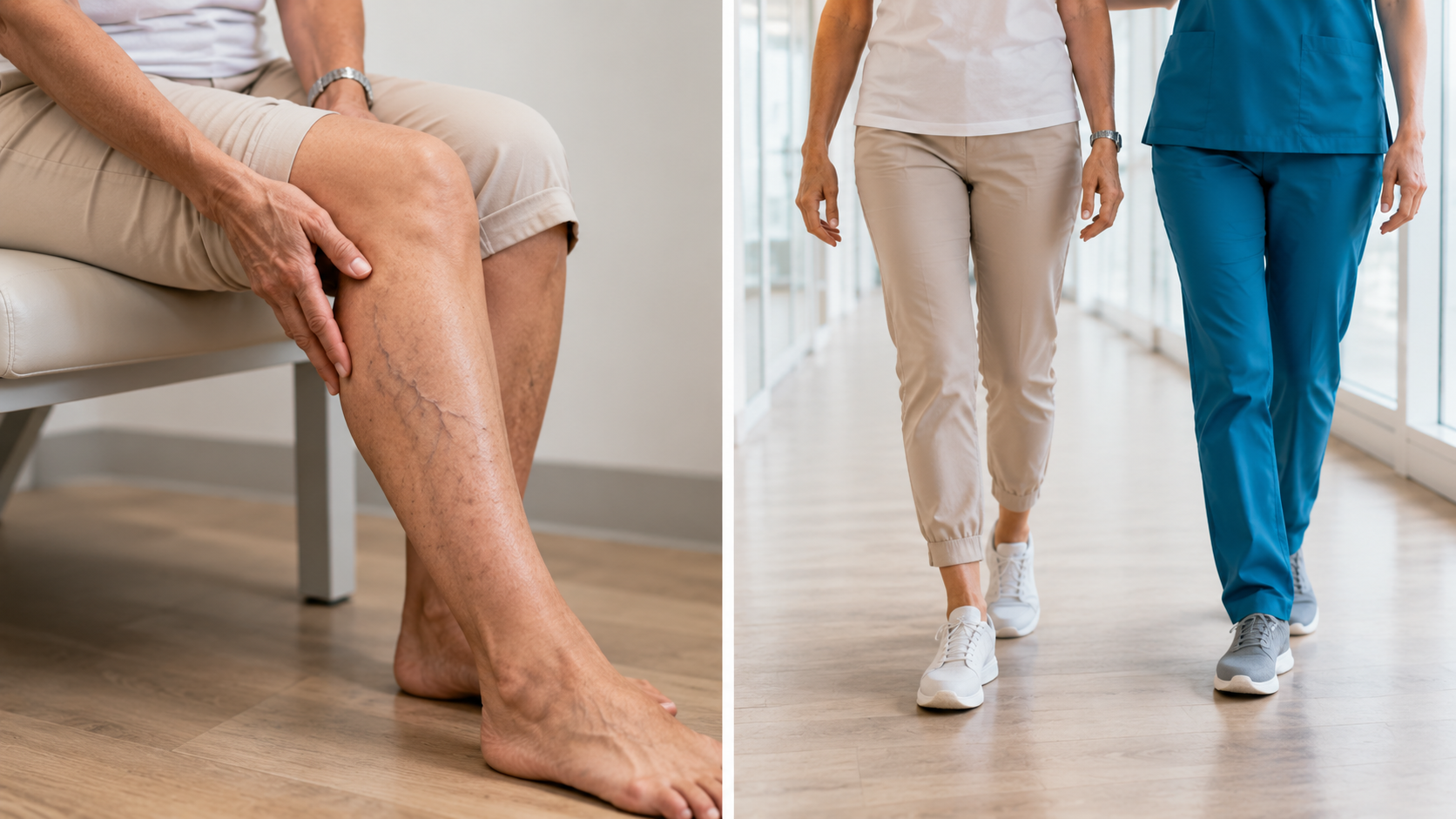
A successfully closed or removed vein generally does not resume normal function. However, treatment cannot eliminate genetics, aging, pregnancy-related changes, hormonal influences, or the possibility that another valve will weaken later.
New veins may therefore develop in a different location.
- Long-term care may include:
- Follow-up examinations
- Ultrasound when indicated
- Regular walking and calf-muscle activity
- Avoiding long uninterrupted periods of sitting or standing
- Weight management where appropriate
- Compression when medically recommended
- Evaluation of new swelling or skin changes
- The development of a new vein does not automatically mean the original procedure failed.
Meet the Vein Care Team at MVM Health
Peter J. Isaac, DO, FACOS is a board-certified vascular surgeon and the Medical Director of the Vascular Lab at MVM Health. He is board-certified in both General Surgery and Vascular Surgery and holds the Registered Physician in Vascular Interpretation (RPVI) credential, reflecting his training in evaluating vascular ultrasound studies.
Why Choose a Local Vein Clinic in Bloomfield, NJ?
MVM Health’s Bloomfield office provides local access to pain, vein, and wellness services at 1129 Broad Street, Bloomfield, NJ 07003.
For patients in Bloomfield and surrounding Essex County communities, a local clinic can make it easier to attend:
- The initial evaluation
- Diagnostic ultrasound
- Treatment visits
- Short-term follow-up
- Post-procedure ultrasound
- Additional treatment sessions when needed
The value of a vein doctor in Bloomfield, NJ is not simply proximity. Patients should look for a diagnostic process that identifies venous reflux, access to multiple treatment options, verified clinician credentials, clear recovery instructions, and appropriate follow-up.
Patients looking beyond Bloomfield can review MVM Health’s New Jersey locations.
Ready to Book Your Vein Evaluation in Bloomfield?
Persistent swelling, aching, heaviness, skin changes, or visible veins should be evaluated according to their underlying cause. A vein evaluation can determine whether your symptoms follow a venous pattern and whether duplex ultrasound or treatment should be considered.
Request a vein evaluation at MVM Health’s Bloomfield office.