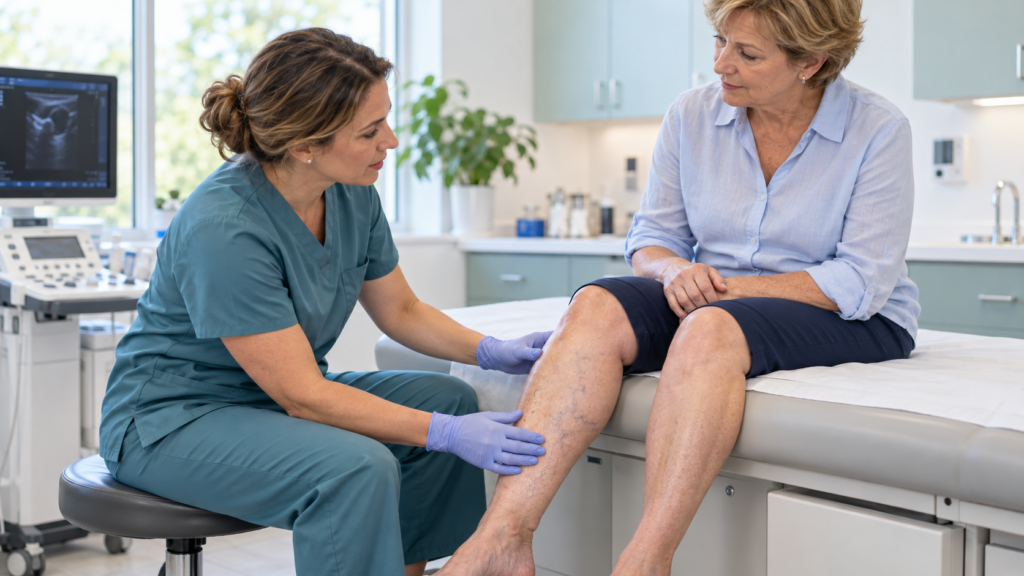

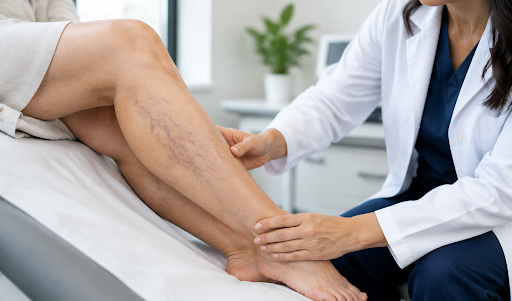
A first vein consultation at MVM Health in Bethlehem typically takes 45 to 60 minutes and includes a symptom review, a physical leg exam, and a duplex ultrasound to check how blood is flowing through your veins. Most patients don’t need a referral; insurance often covers the consultation and diagnostic ultrasound when symptoms are present, and you’ll usually leave with either a same-day discussion of findings or a scheduled follow-up to review results and go over treatment options.
If you’ve been putting off calling a vein doctor near me because you’re not sure what actually happens at a vein consultation, or whether your symptoms are “bad enough” to justify a visit, this guide walks through the entire process step by step, specific to what patients can expect at our Bethlehem, PA location.
Why So Many Bethlehem-Area Patients Wait Too Long
More than 30 million people in the United States live with some form of chronic vein disease, yet a large share of them wait months or years before scheduling an evaluation. Usually it’s not because the symptoms aren’t real. It’s because they’re unsure what a consultation actually involves, worried about cost, or assuming their aching, heavy, or visibly bulging legs are just a normal part of getting older or standing all day at work.
For Lehigh Valley residents specifically, many patients tell us they’d been managing symptoms quietly for years, adjusting their routines around swelling or discomfort, before finally looking into vein consultation Bethlehem, PA and realizing how straightforward the first visit actually is.
Why Location Matters for Vein Care in the Lehigh Valley
Bethlehem’s mix of long-standing manufacturing and healthcare employers, retail work along the Route 22 corridor, and an aging population means our Bethlehem office sees a wide range of patients: warehouse and hospital staff who spend entire shifts on their feet, office workers who sit for long stretches at a desk, and older residents whose vein valves have simply worn down over decades. Each of these patterns tends to produce a slightly different symptom picture, which is part of why a generalized online symptom checklist rarely tells the full story compared to an actual in-person evaluation.
Our Bethlehem location is situated to serve patients throughout the Lehigh Valley, including Allentown, Easton, and the surrounding Northampton and Lehigh County communities, without requiring a trip into Philadelphia or a multi-week wait for a specialist appointment that’s common at larger hospital-affiliated vein programs.
Do You Need a Referral to See a Vein Specialist?
No. In most cases, you can schedule directly with a vein specialist without a referral from your primary care doctor. This is true at MVM Health’s Bethlehem location and is standard across most vein clinics nationally. If your insurance plan specifically requires a referral for specialist visits, our team can help confirm that before your appointment so there are no surprises.
Step 1: Scheduling and What to Bring
Once you’ve decided to book, a few simple preparation steps make the visit go smoothly.
What to bring to your appointment:
- Photo ID
- Insurance card
- A current list of medications and supplements
- Any prior vein-related imaging or medical records, if you have them
- A brief symptom timeline, when symptoms started, what makes them better or worse, and how they’ve changed over time
What to wear: Loose, comfortable clothing you can roll up above the knee makes the physical exam and ultrasound easier. It’s also worth skipping lotion on your legs the day of your visit, since it can interfere with ultrasound gel adhesion.
Your Legs Have Been Trying to Tell You Something
A first vein consultation is simpler than most people expect. One visit covers your exam and ultrasound, no separate imaging appointment, no long wait for answers. Let’s find out what’s actually going on, together.
A simple symptom timeline is more useful than patients often expect. If your swelling is worse by evening or your legs ache more after standing, noting that pattern gives your provider real diagnostic information before they even examine you. Photos can help too, especially if visible changes like ankle puffiness or skin discoloration vary between morning and evening.
Step 2: Insurance Verification Before You Arrive
One of the most common questions we get before a first visit is whether insurance covered vein treatment applies to the consultation itself, not just future treatment. In most cases, yes. The initial consultation and diagnostic duplex ultrasound are typically covered when you have documented symptoms of venous insufficiency, though coverage details vary by plan.
At MVM Health, our team verifies your benefits before your appointment whenever possible, so you have a clear picture of what to expect financially before you walk in. This matters because insurance requirements for vein treatment tend to be fairly specific: most plans require objective evidence of venous disease, meaning documented symptoms plus ultrasound findings, not just visible veins or cosmetic concerns alone. Getting this verification done ahead of time removes one of the biggest sources of first-visit anxiety.
Step 3: The Health History and Symptom Review
Your appointment starts with a conversation, not a machine. Your provider will review:
- When your symptoms started and how they’ve progressed
- Family history of varicose veins or other circulatory conditions
- Any history of blood clots, prior leg injuries, or previous vein treatment
- Current medications and supplements
- How your symptoms affect daily activities, work, sleep, or exercise
- Your specific goals for the visit, whether that’s symptom relief, addressing visible veins, or simply understanding what’s going on
This step matters more than patients often realize. Insurance approval for treatment, if it comes to that, generally requires documented functional symptoms that affect your quality of life, not just an observation that your legs “look bad” cosmetically. A thorough symptom history early in the process supports both your diagnosis and, later, any insurance documentation your provider may need to submit on your behalf.
Step 4: The Physical Examination
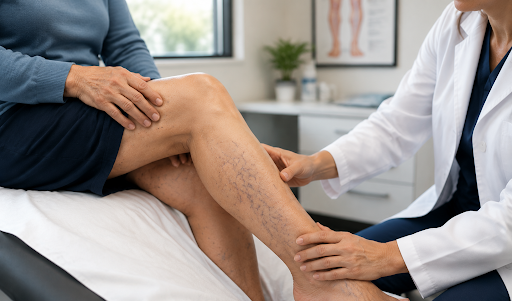
After your history is reviewed, your provider performs a focused physical exam of your legs. This typically includes:
- Visually checking for varicose veins, spider veins, or skin changes like discoloration or thickening
- Checking for swelling, particularly around the ankles
- Assessing skin temperature and color
- Gently checking for tenderness along visible or suspected problem veins
- Evaluating your range of motion and any areas of visible irritation or early skin breakdown
The physical exam gives your provider a first impression, but it can’t show what’s happening underneath the skin, which is exactly why the next step matters.
Step 5: Duplex Ultrasound, What It Is and Why It’s Standard
If your symptoms suggest an underlying vein problem, most patients will have a duplex ultrasound during the same visit. This is a non-invasive, painless imaging test, and it’s genuinely central to an accurate diagnosis.
How it works: A technician applies a small amount of gel to your leg, then moves a handheld probe called a transducer across the skin. The device sends high-frequency sound waves into your veins and captures the returning signal to build a real-time image of blood flow. The “duplex” part refers to two things happening simultaneously: standard ultrasound imaging of the vein structure, plus Doppler measurement of how blood is actually moving through it.
What it shows:
- Whether blood is flowing normally or refluxing (moving backward) through your vein valves
- The specific location and severity of any valve dysfunction
- Whether there’s an obstruction or blockage
- Confirmation of chronic venous insufficiency, if present, the underlying cause behind most varicose vein and vein disease symptoms
How long it takes: Typically 15 to 30 minutes, performed in-office with no need for a separate imaging center visit or a second appointment.
This step is also what makes your diagnosis, and any future insurance approval, based on real clinical evidence rather than a visual assumption. Many insurance companies specifically require ultrasound-confirmed venous insufficiency before approving treatment, so this isn’t just diagnostic; it’s often the documentation that supports everything that follows.
It’s worth understanding why this test carries so much clinical weight. Two people can have nearly identical-looking varicose veins on the surface and turn out to have very different underlying pictures on ultrasound; one might show reflux limited to a single vein segment, while the other shows more widespread valve failure across several veins. That distinction directly changes what treatment makes sense, which is why guessing based on appearance alone, even by an experienced eye, isn’t a substitute for imaging.
Step 6: Reviewing Your Results
Once the exam and ultrasound are complete, your provider walks you through what was found in plain language, what’s working normally, what isn’t, and what it means clinically. This is the point where many patients finally get an explanation for symptoms they’d been living with for years without a clear cause.
Depending on the clinic’s workflow and the complexity of your findings, this discussion may happen the same day or at a brief follow-up visit scheduled specifically to review your ultrasound results and discuss treatment in more depth. Either way, you should leave this step understanding exactly what’s going on in your veins, not just that “something’s wrong.”
Step 7: Discussing Treatment Options, If Needed
Not every consultation ends with a treatment recommendation, and that’s normal. If your findings don’t show significant venous insufficiency, your provider may recommend simple monitoring or conservative measures. If they do confirm a treatable vein problem, your provider will walk through which options apply to your specific case, since recommendations are based on your ultrasound findings and symptom severity, not appearance alone.
Depending on what your evaluation shows, options may include:
- Conservative management — compression stockings, leg elevation, activity changes, and weight management for milder cases
- Minimally invasive procedures — including radiofrequency ablation, endovenous laser therapy, VenaSeal (a medical adhesive closure), and sclerotherapy, most of which are done in-office with little to no downtime
For a full breakdown of how these procedures compare, including how they work, what recovery looks like, and which patients tend to be good candidates for each, see our complete guide: Vein Treatments: Comparing RFA, VenaSeal, Sclerotherapy & More.
If your evaluation points to chronic venous insufficiency specifically, it’s also worth understanding the underlying condition itself, not just the treatment options. Our guide on chronic venous insufficiency covers what’s actually happening in your veins and why symptoms tend to progress without treatment.
What Symptoms Warrant a Vein Consultation?
You don’t need to wait until symptoms are severe. Consider scheduling if you notice:
- Bulging, twisted, or rope-like veins, even without pain
- Swelling, particularly around the ankles, that builds through the day
- Aching, heaviness, or tenderness in your legs
- Itchy, dry, or irritated skin near visible veins
- Skin discoloration, especially a brownish tint near the ankle
- Wounds or sores on the lower leg that heal slowly
- Purely cosmetic concerns about how your legs look, which is also a valid reason to seek a consultation
Warning Signs That Need Prompt Attention
Most vein symptoms aren’t urgent, but a few patterns deserve faster follow-up rather than a routine scheduling timeline:
- Sudden swelling in one leg only, especially with pain or warmth
- Skin that’s hot, red, or rapidly changing in appearance
- An open wound or ulcer that isn’t healing
- Sudden, severe leg pain unrelated to activity
If you notice any of these, call promptly rather than waiting for a standard appointment slot. These patterns can occasionally indicate a blood clot or an advanced skin complication that benefits from earlier evaluation.
Questions Worth Asking During Your Consultation
A first visit goes further when you come prepared with a few practical questions:
- What’s the specific diagnosis based on my exam and ultrasound?
- Could another condition explain my symptoms, and has that been ruled out?
- What happens if I delay treatment, do symptoms typically progress?
- What does recovery look like for the recommended treatment, and when can I return to normal activity?
- What does my insurance require for approval, and what’s my likely out-of-pocket cost?
Your provider should be able to answer all of these clearly before you leave.
What Happens After Your First Visit
If treatment is recommended and you decide to move forward, the typical next steps are:
- Insurance authorization, if required, using the documentation from your consultation and ultrasound
- Scheduling your procedure, most of which are done in-office with local anesthesia
- Pre-procedure instructions, covering anything you need to do beforehand
- The procedure itself, typically under an hour for most minimally invasive options
- Follow-up care, to confirm the treated vein has closed properly and check on healing
Many patients are able to walk out and resume normal activity the same or next day, a significant shift from the older surgical vein stripping approach that required general anesthesia and weeks of recovery.
It’s also worth setting realistic expectations about the timeline. Between your first consultation and an actual procedure, most patients go through insurance authorization first, which can take anywhere from a few days to a couple of weeks depending on your specific plan and whether additional documentation is requested. Rather than feeling like a delay, this step is what protects you financially, since starting treatment before authorization is confirmed can sometimes create unexpected out-of-pocket costs. Our team typically handles the back-and-forth with your insurer directly, so you’re not the one chasing down paperwork.
Finding the Right Vein Doctor Near You in Bethlehem
If you’ve been searching for a vein doctor near me in the Lehigh Valley, what matters most is choosing a practice that performs in-office duplex ultrasound (rather than referring you elsewhere for imaging), verifies insurance before your visit, and takes the time to walk you through findings in plain language rather than rushing straight to a treatment recommendation.
MVM Health’s Bethlehem location is set up to handle the entire diagnostic process- history, exam, and ultrasound- in a single visit, so you’re not left waiting weeks between steps just to get a clear answer.
Get directions to our MVM Health Bethlehem office or schedule your vein consultation today to take the next step toward better vein health.
If you’re located elsewhere in Pennsylvania, we also see patients at our other locations. Patients in Monroe County can read more about what to expect at our Stroudsburg vein specialist page, and patients in Montgomery County can find similar guidance on our King of Prussia vein specialist page.
Ready to Schedule Your First Visit?
If aching, swelling, visible veins, or skin changes have been part of your daily routine for longer than you’d like to admit, a first consultation is a straightforward way to finally get an answer. At MVM Health in Bethlehem, our team verifies your insurance ahead of time, performs your full evaluation, including ultrasound, in a single visit, and walks you through exactly what we find. Schedule your consultation to take the first step.