
Varicose veins are enlarged, twisted veins that often appear blue or purple beneath the skin. They may look raised, bulging, or rope-like, especially on the legs. While some people notice only a change in appearance, others experience aching, heaviness, swelling, itching, burning, or leg cramps.
If you have noticed varicose veins in Stanhope, paying attention to both how the veins look and how your legs feel can help you recognize when an evaluation may be appropriate.
What Do Varicose Veins Look Like?
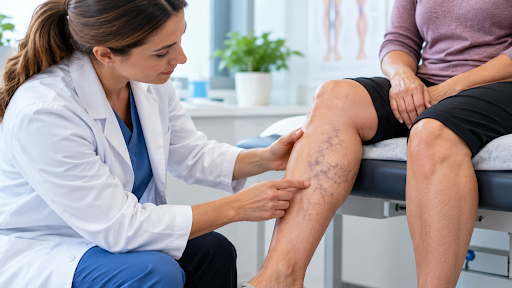
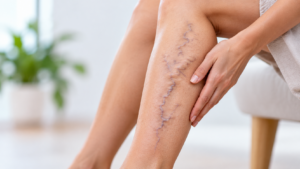
Varicose veins are usually larger and more noticeable than spider veins. Their appearance can vary depending on the veins involved and how close they are to the skin.
Common signs may include:
- Blue, purple, or dark-colored veins: Varicose veins may appear darker than surrounding veins because of changes in blood flow within the affected vein.
- Raised or bulging veins: Some veins may become enlarged enough to protrude above the skin, making them easier to see or feel.
- Twisted or rope-like veins: Rather than following a straight path, affected veins may develop a winding, knotted, or cord-like appearance.
- Clusters of enlarged visible veins: Several affected veins may appear close together, particularly along the calves, thighs, or other areas of the legs.
- Veins that become more noticeable while standing: Standing can increase pressure in the leg veins, which may make enlarged veins appear more prominent.
- Swelling around the ankles or lower legs: Varicose veins can sometimes occur along with swelling, particularly after long periods of sitting or standing.
Some people may also notice skin discoloration or other changes around affected areas, especially when an underlying vein problem has been present for some time.
Not every visible leg vein is a varicose vein. Spider veins are generally smaller and flatter, appearing as fine red, blue, or purple lines close to the skin’s surface.
What Do Varicose Veins Feel Like?
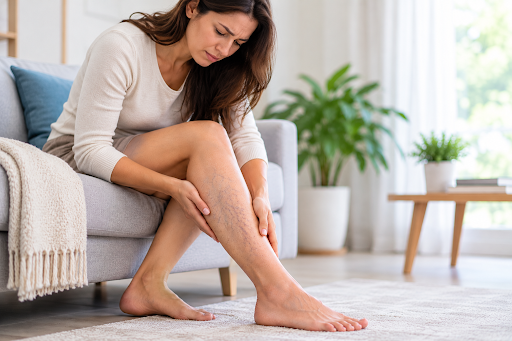
Varicose veins do not always cause symptoms. When symptoms occur, however, they can affect how the legs feel during everyday activities.
Common varicose vein symptoms may include:
- Aching or soreness in the legs
- A heavy or tired feeling
- Throbbing or burning sensations
- Itching around affected veins
- Leg or ankle swelling
- Muscle cramps, particularly at night
- Discomfort after prolonged sitting or standing
Symptoms vary from person to person. Someone may have clearly visible varicose veins without significant discomfort, while another person may experience aching legs, swelling, or heaviness that becomes more noticeable as the day progresses.
Why Can Varicose Veins Cause Aching or Heavy Legs?
Veins in the legs contain small valves that help blood travel back toward the heart. When these valves do not work effectively, some blood may flow backward and collect in the veins. This is known as venous reflux.
According to the National Heart, Lung, and Blood Institute (NHLBI), varicose veins can develop when vein walls or valves become weakened or damaged, allowing blood to pool in the veins. Symptoms may include aching, heaviness, swelling, itching, or changes in the skin.
Several factors can increase the likelihood of developing varicose veins, including age, family history, pregnancy, excess weight, and spending long periods sitting or standing.
You can learn more about the condition and available care on MVM Health’s Varicose Veins page.
Noticing Varicose Vein Symptoms? Get Them Checked
If visible or bulging veins are accompanied by aching, heaviness, swelling, or leg discomfort, consider getting your symptoms evaluated. Our vein specialists in Stanhope, NJ can assess your concerns and discuss appropriate next steps.
When Should Visible Leg Veins Be Evaluated?
Visible veins alone do not necessarily indicate a serious medical problem. However, an evaluation may be appropriate when they are accompanied by persistent symptoms or changes in the skin or leg.
Consider speaking with a healthcare provider if you notice:
- Persistent aching or heaviness
- Recurring leg or ankle swelling
- Burning or itching around a vein
- Skin discoloration around the ankle or lower leg
- Increasing tenderness or discomfort
- A sore that is slow to heal
- Symptoms that interfere with standing, walking, sleep, or daily activities
A professional evaluation can help determine whether the visible veins are primarily superficial or whether an underlying vein problem may be contributing to the symptoms.
What Happens During a Vein Evaluation in Stanhope?
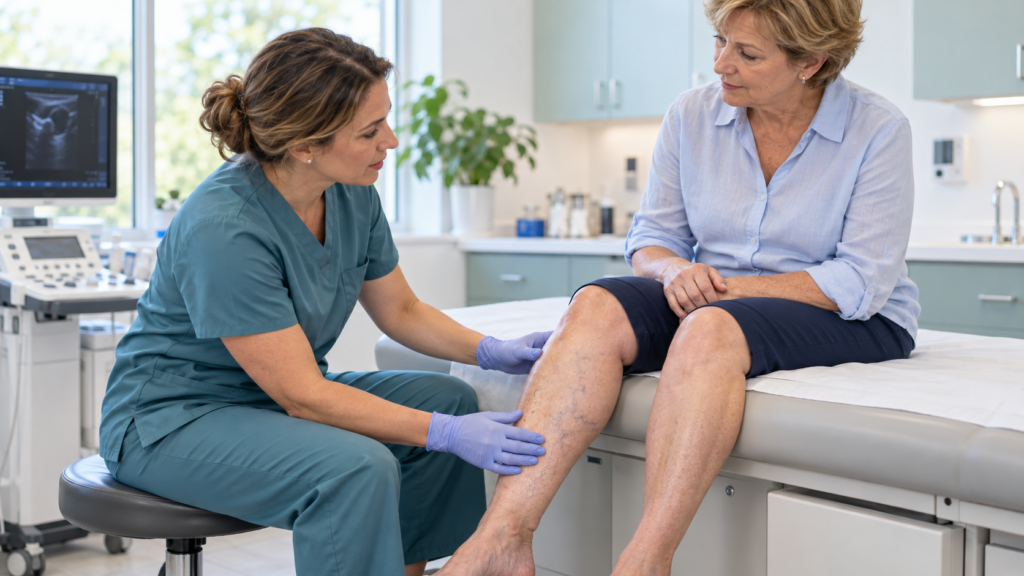
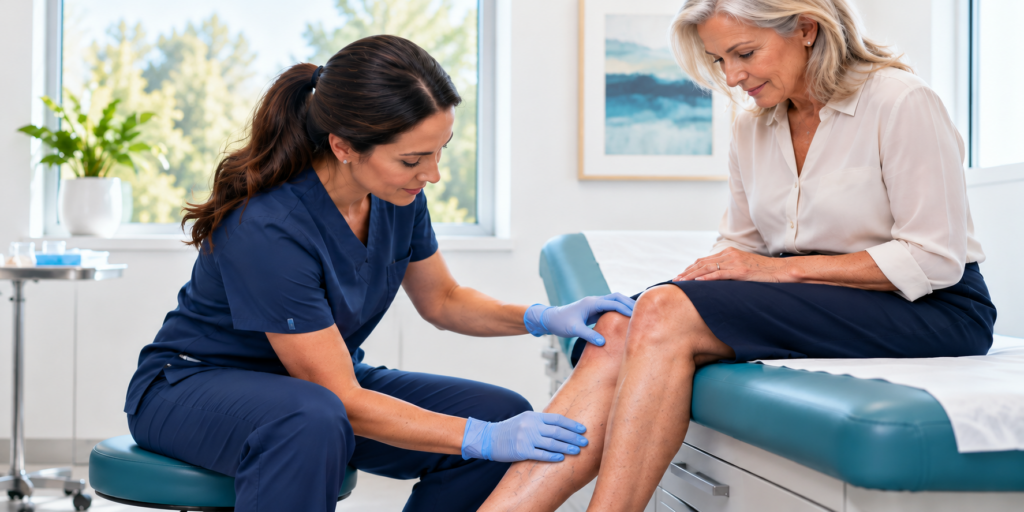
When you visit a Stanhope vein specialist, the evaluation will generally begin with a discussion about your symptoms, medical history, and when you first noticed changes in your legs.
Your provider may examine the legs for enlarged veins, swelling, tenderness, and changes in the surrounding skin.
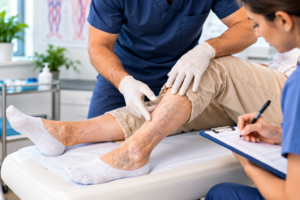
Depending on your symptoms and examination findings, diagnostic testing may be recommended. A duplex ultrasound is a noninvasive test that can assess blood flow and how well the valves inside the veins are functioning.
The purpose of the evaluation is to understand what may be contributing to your symptoms before determining whether additional care or treatment is appropriate.
Patients experiencing visible veins, leg heaviness, swelling, or other concerns can learn more about local evaluation and treatment options on MVM Health’s Stanhope vein treatment page.
When Should You Seek Medical Care Promptly?
Most visible varicose veins can be discussed during a routine evaluation, but certain symptoms deserve more immediate medical attention.
Seek prompt medical care if you experience:
- Sudden or significant swelling in one leg
- New or worsening leg pain
- Warmth or redness in the affected area
- A persistent open sore
- Significant skin changes around a vein
- Bleeding from a varicose vein
Sudden shortness of breath, chest pain, coughing up blood, or fainting can indicate a medical emergency and requires immediate medical attention. These symptoms should not be assumed to be routine varicose vein symptoms.
Local Vein Care for Stanhope and Nearby Communities
For patients seeking vein care closer to home, MVM Health provides vein services at its Stanhope, NJ location.
The Stanhope location serves patients from nearby areas including Netcong, Hopatcong, Mount Olive, Byram Township, Roxbury Township, and surrounding communities.
If you have noticed new visible veins or symptoms such as aching, heaviness, or swelling, an evaluation can help determine what may be contributing to those changes and whether further testing or care may be appropriate.