
Patients considering vein treatment Philadelphia, PA options can often return to light daily activity soon after a minimally invasive procedure, but complete recovery is not identical for everyone. The timeline depends on the treatment performed, the number and size of veins treated, your health, and the instructions provided by your vein specialist.
If you are planning vein treatment in Philadelphia, PA, knowing what may happen during each stage can make recovery easier to manage. This guide provides a general timeline-not a substitute for the personalized instructions you receive from your treating clinician.
How Long is Recovery After Vein Treatment ?
Many contemporary varicose-vein procedures are performed without a hospital stay. Walking is commonly encouraged after treatment, while strenuous exercise, heavy lifting, prolonged travel, bathing, or compression instructions may vary by procedure and patient.
Recovery also depends on what was treated. Thermal ablation or VenaSeal® closes a refluxing vein, sclerotherapy treats selected veins with an injected medication, and ambulatory phlebectomy removes bulging surface veins through small openings. MVM Health’s guide to vein treatment options explains how these procedures differ.
| Recovery stage | What may be normal | Typical priorities |
| First 24 hours | Mild soreness, tightness, swelling, or drainage at a small puncture site | Walk as directed, protect the treatment site, follow compression instructions |
| Days 2–7 | Bruising, tenderness, or a pulling sensation along the treated vein | Continue light movement and follow activity restrictions |
| Weeks 2–4 | Gradual improvement, with some discoloration or firmness still present | Attend follow-up and increase activity only as advised |
| One to three months | Continued fading of treated veins and symptom improvement | Monitor results and discuss persistent or new veins |
This table is a planning guide. Your written discharge instructions take priority because recovery after sclerotherapy is not necessarily the same as recovery after ablation or phlebectomy.
Treatment Day and the First 24 Hours
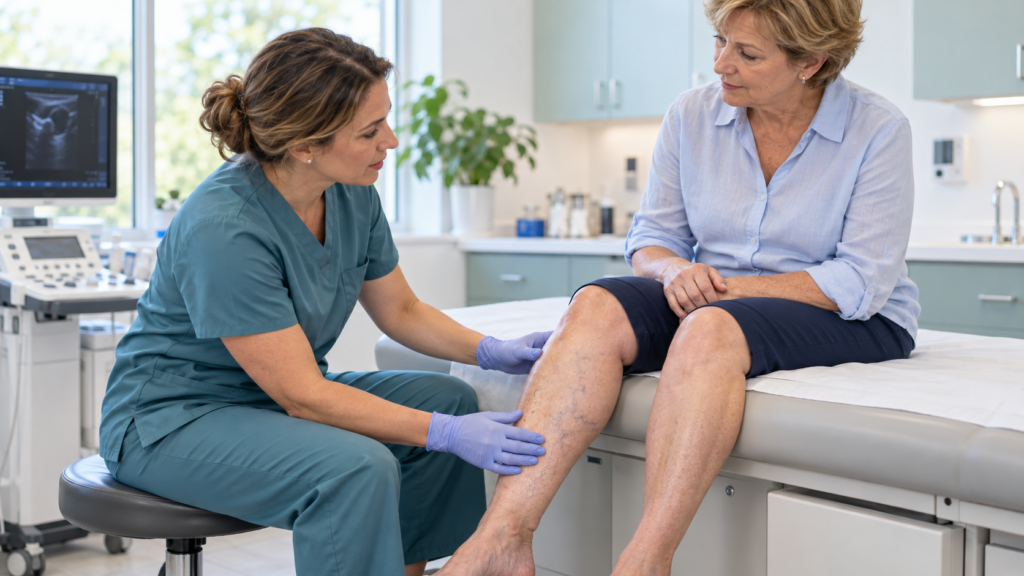
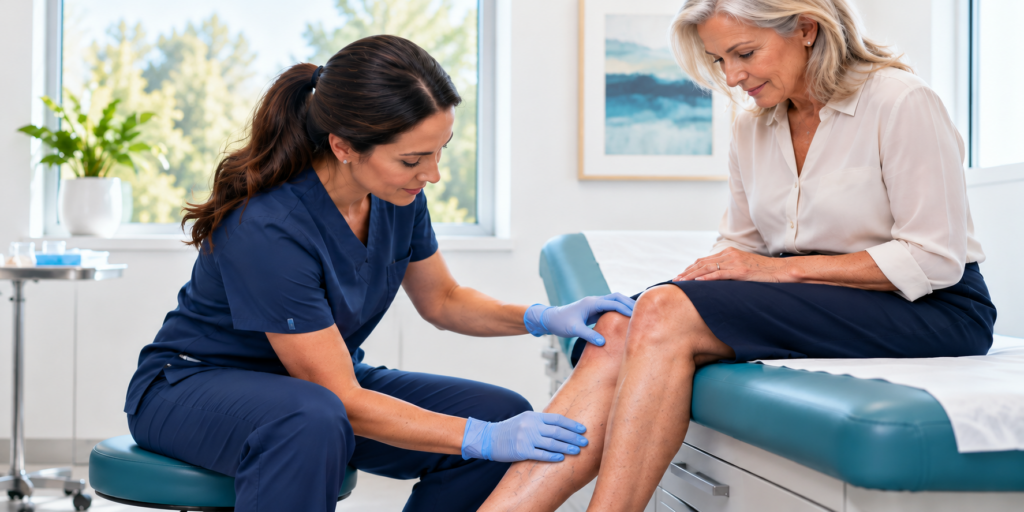
You will usually leave an office-based procedure the same day. Mild tenderness, bruising, swelling, or tightness can occur near the treated area. Small bandages may cover catheter, needle, or micro-incision sites.
Your clinician may ask you to walk for short periods and avoid remaining still for long stretches. Do not drive, remove dressings, take medication, apply ice, or shower based on a generic online schedule; follow the procedure-specific directions supplied by your care team.
Arrange transportation if your clinician recommends it. Keep the office number and written aftercare plan readily available before leaving the facility.
The First Week: Movement, Bruising, and Discomfort
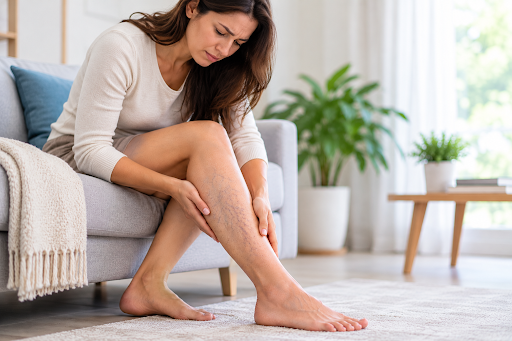
During the first week, bruising may become more visible before it fades. Some patients notice localized firmness, tenderness, itching, or a pulling sensation along the treated vein. These symptoms should generally remain manageable and gradually improve rather than become more severe.
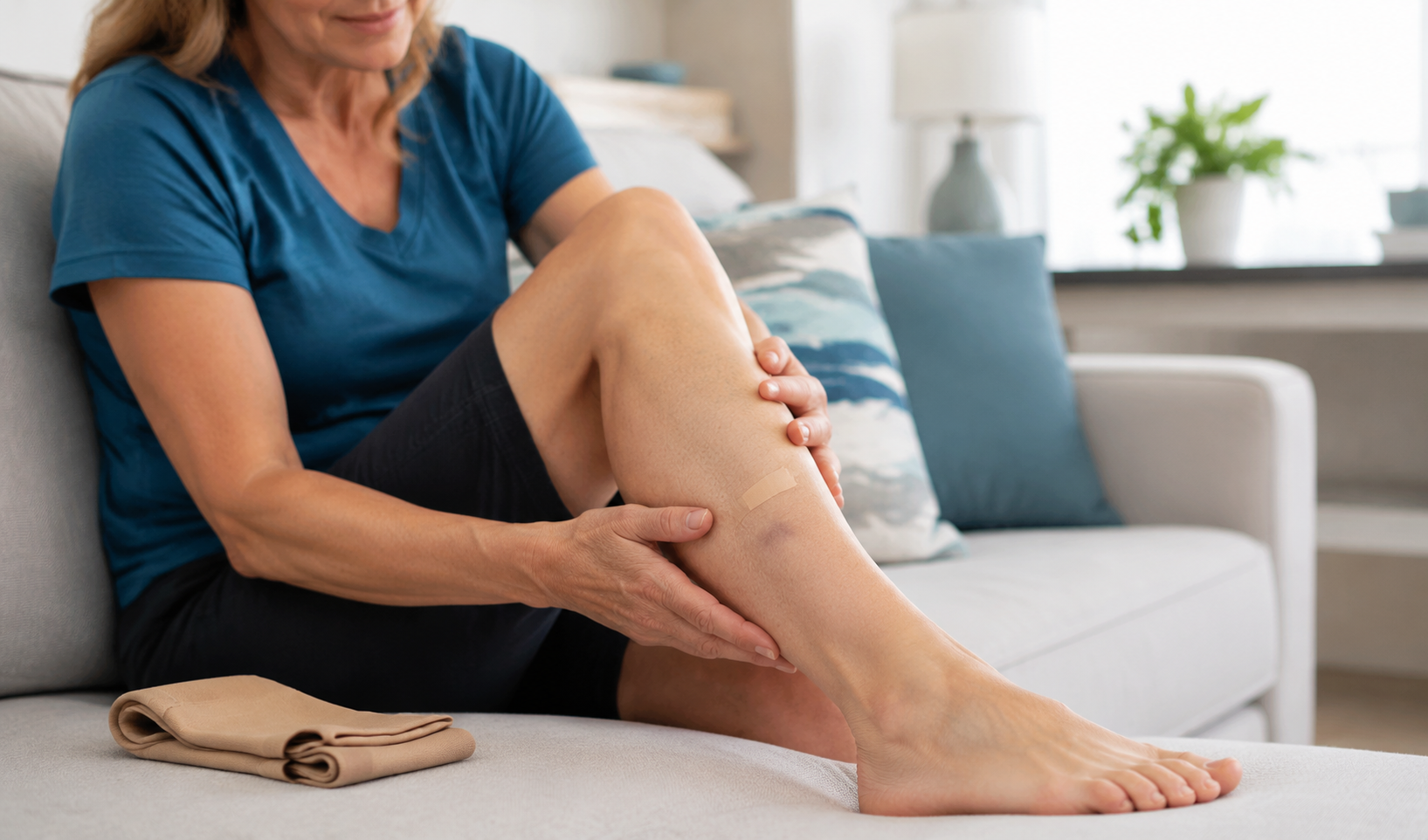
Light walking can support mobility, but the timing of work, exercise, lifting, and travel depends on the procedure and your occupation. A desk-based employee and someone who lifts, climbs, or stands throughout a shift may need different return-to-work guidance.
Patients treated for chronic venous insufficiency should remember that visible changes and symptom improvement may occur on different timelines. Closing a problem vein does not make every surface vein disappear immediately.
Weeks Two Through Four: Returning to Your Routine
Bruising and soreness often continue to settle during this period. Treated veins may still feel firm or look darker before gradually becoming less noticeable. Larger treatment areas or combined procedures may take longer to calm down.
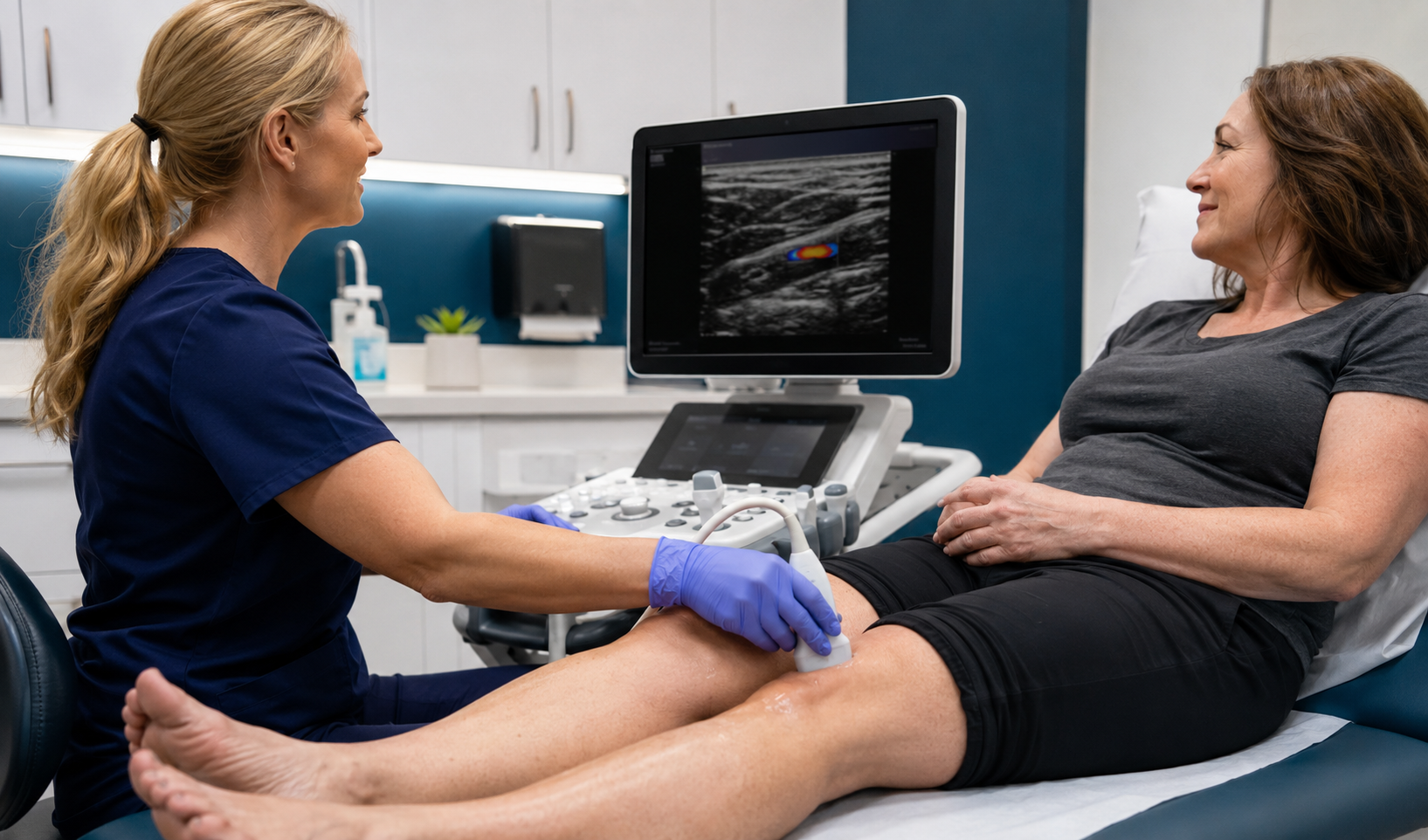
A follow-up visit or ultrasound may be recommended depending on the procedure, symptoms, and clinician’s protocol. The Society for Vascular Surgery, American Venous Forum, and American Vein and Lymphatic Society guidelines address evaluation and follow-up after treatment for lower-extremity varicose veins.
One to Three Months: Results and Follow-Up
Improvement is usually gradual. Symptoms such as heaviness or aching may change before the treated vein fully fades, while bruising or temporary discoloration can make the area look worse before it looks better. Some patients need more than one treatment session because different veins require different approaches.
Recovery expectations also vary by method. Radiofrequency ablation treats appropriate refluxing veins with controlled thermal energy, while sclerotherapy is often used for spider veins, smaller varicose veins, or selected residual branches. Neither procedure should be promised to produce immediate or permanent cosmetic perfection.
At follow-up, ask whether the treated vein has responded as expected, whether additional veins need care, and when photographs or symptom changes can be fairly assessed.
Recovery Warning Signs That Need Medical Attention
Contact your treating team promptly if you develop worsening pain, rapidly increasing swelling, spreading redness, warmth, drainage, fever, persistent bleeding, new numbness, or a concerning skin-color change. These findings do not automatically mean a serious complication, but they should not be ignored.
Seek urgent medical care for sudden marked swelling or pain in one leg. Call 911 for chest pain, sudden shortness of breath, coughing blood, fainting, or a rapid heartbeat, as these may be warning signs of a pulmonary embolism. Do not wait for a routine follow-up if severe symptoms occur.
A Preparation Checklist for Philadelphia Patients
Before scheduling, ask the vein clinic five practical questions:
- Which procedure is being recommended, and what did the examination or ultrasound show?
- When can I drive, work, exercise, lift, shower, and travel?
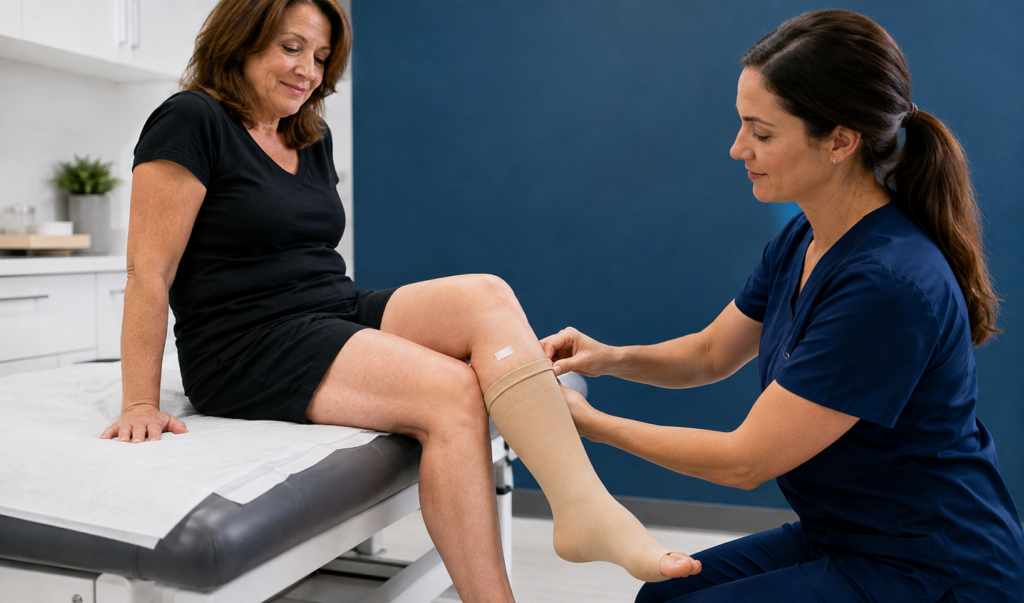
- Will I need compression stockings, and for how long?
- What symptoms should prompt a same-day call or emergency care?
- What will my insurance cover, and what may I owe?
An insurance-covered vein treatment may require documented symptoms, ultrasound findings, conservative care, prior authorization, or an in-network provider. Cosmetic treatment is often excluded. Benefit verification is useful, but it is not a guarantee that an insurer will pay a claim.
If you are searching for a vein doctor near me, choose a practice that explains the diagnosis, procedure-specific recovery, alternatives, costs, and follow-up plan before treatment. MVM Health provides vein care for Philadelphia patients and accepts appointment requests at our Philadelphia, PA Clinic.
Ready to understand your treatment and recovery options?
Request a vein evaluation in Philadelphia and ask the care team what downtime is realistic for your procedure, work, and health history.