
By the end of a long day, you notice your ankles look a little puffier than usual. Or maybe it’s not new you’ve had faint, thread-like veins on your calves for years, and lately a few have started to look more raised, more rope-like, more noticeable in shorts or a swimsuit. Whether it’s swelling, visible veins, or a heavy, tired feeling in your legs by evening, these symptoms are common, and they’re also frequently misunderstood. This guide walks through what’s actually happening beneath the skin, how to tell one vein-related symptom from another, and what treatment options exist if an evaluation points toward one.
Why Leg Veins Struggle to Keep Up
Leg veins work against gravity to return blood to the heart, and when the one-way valves inside them weaken or fail, blood can pool in the lower legs, leading to the swelling, aching, and visible veins many people experience. Unlike arteries, which get help from the heart’s pumping pressure, veins in the legs rely on a combination of one-way valves and the squeezing action of calf muscles to push blood upward. When those valves become damaged or stretched a condition often referred to as venous insufficiency blood can flow backward and collect in the lower leg instead of moving efficiently toward the heart.
This backup doesn’t happen overnight. It tends to develop gradually, often over years, and is influenced by a combination of genetics, age, prolonged standing or sitting, pregnancy, and other factors that increase pressure in the leg veins. Understanding this mechanism helps explain why the same underlying issue can show up differently from one person to the next as visible veins in one case, swelling in another, and both in a third.
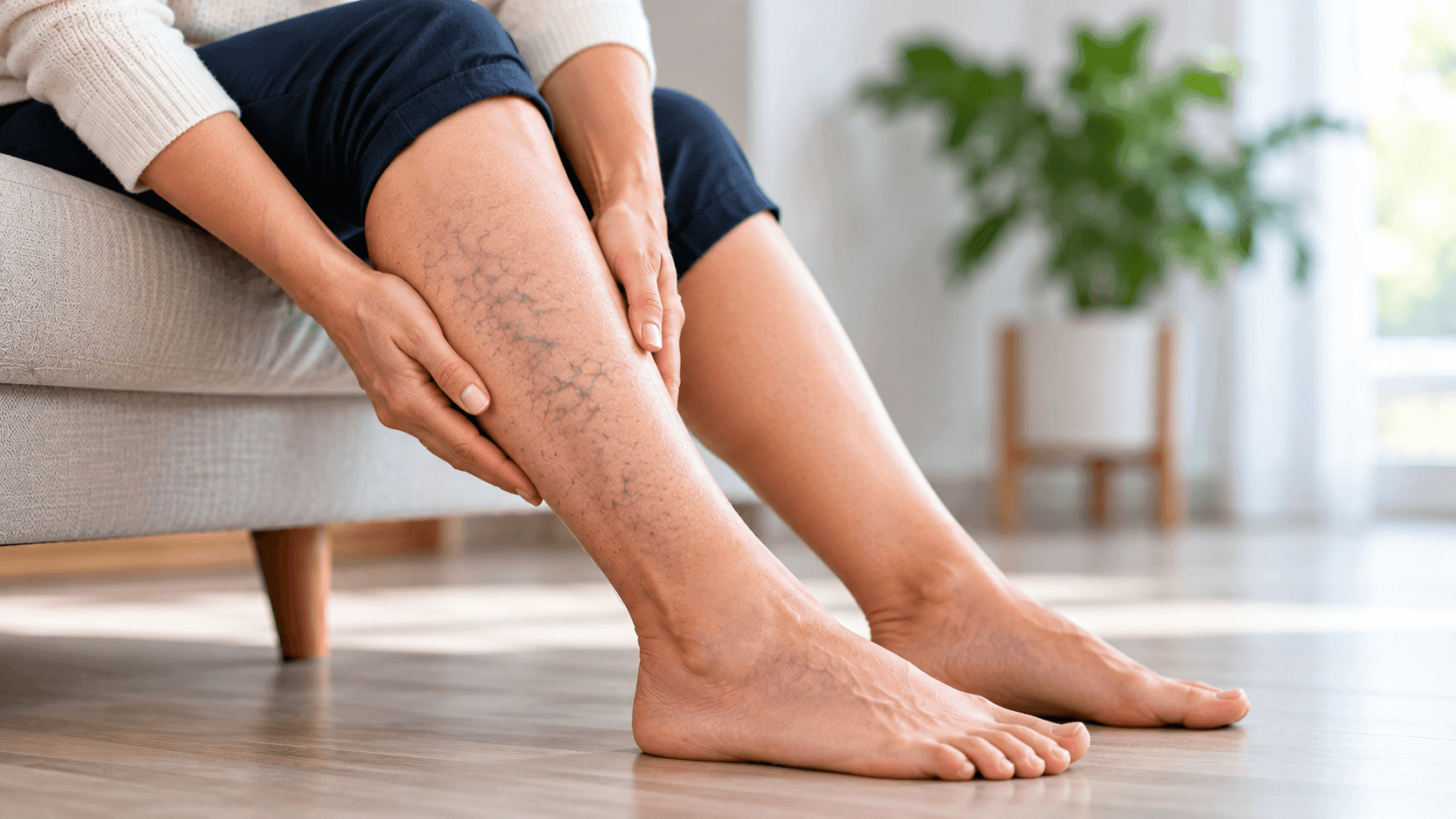
Recognizing the Signs: Swelling, Heaviness, and Visible Veins
Vein-related leg symptoms typically cluster into a few recognizable patterns, and noticing which pattern applies to you can help guide the conversation with a provider. These symptoms often overlap, but each has a slightly different character worth paying attention to.
Common patterns include:
- Swelling that builds throughout the day and is most noticeable by evening, often improving somewhat overnight
- A heavy, tired, or achy feeling in the legs, especially after standing or sitting for extended periods
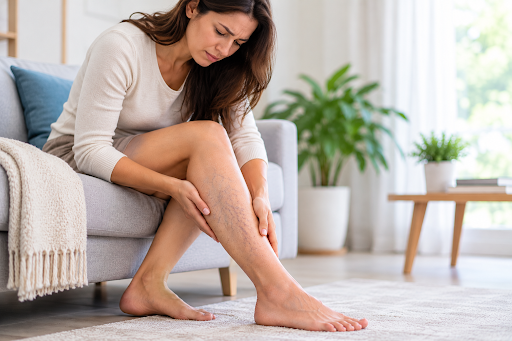
- Visible veins that appear bulging, twisted, or rope-like, typically on the calves or inner thighs
- Fine, web-like clusters of red or blue veins closer to the skin’s surface
- Itching or a mild burning sensation around visible veins
- Restlessness or cramping, particularly at night
None of these symptoms are dangerous on their own, but persistent versions of any of them are worth having evaluated, since they can point toward an underlying vein condition that tends to progress gradually if left unaddressed.
Varicose Veins vs. Spider Veins: What’s the Difference
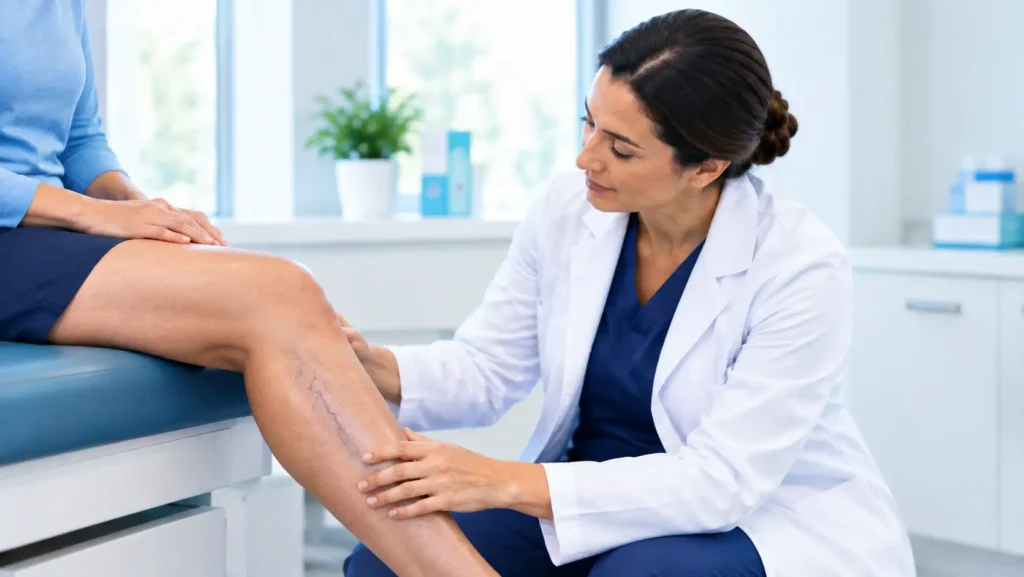
Varicose veins are larger, raised, and rope-like, sitting closer to the skin’s surface with a twisted appearance, while spider veins are smaller, flatter, and web-like, usually appearing as a cluster of thin red, blue, or purple lines. Though the two are often mentioned together, they aren’t the same condition, and they don’t always occur together.
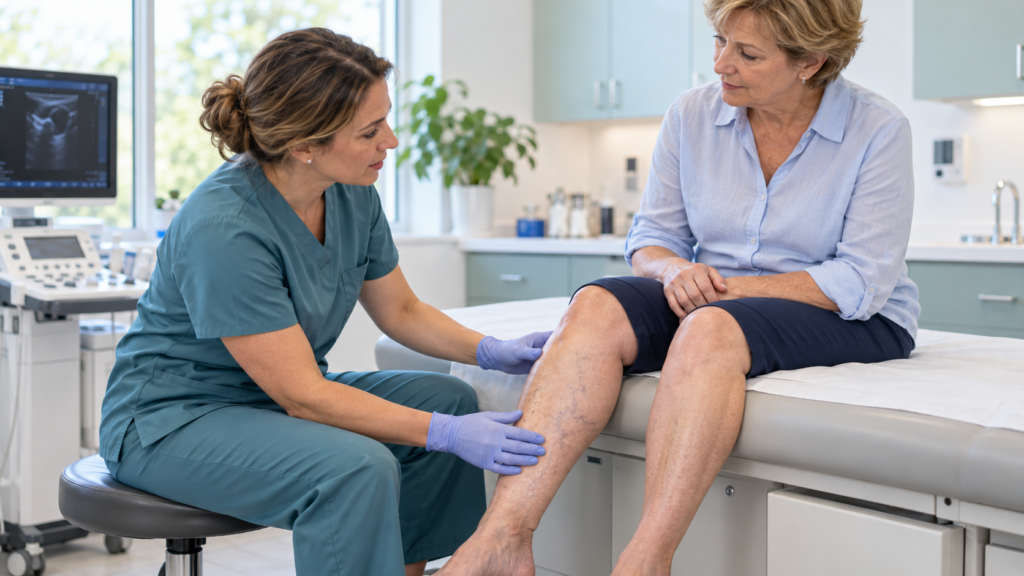
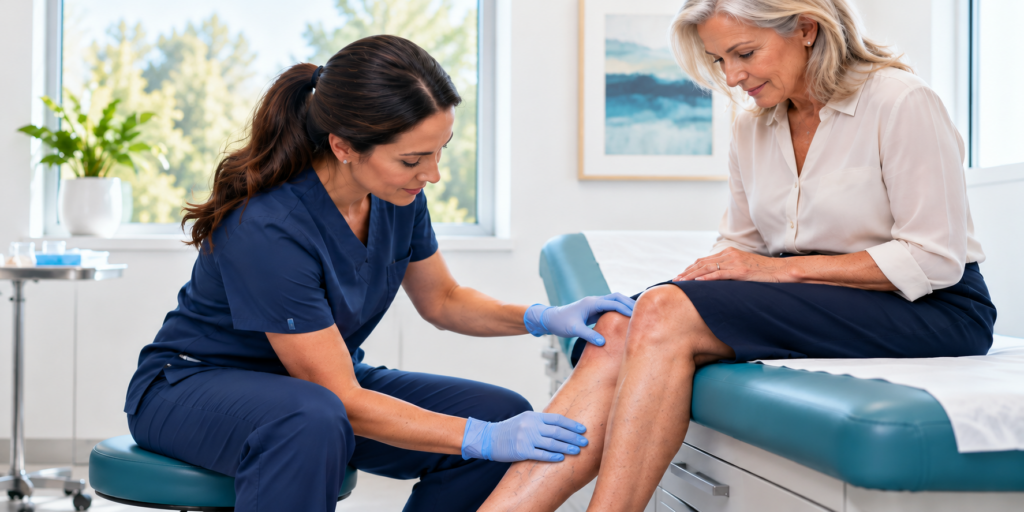
Varicose veins are more likely to be associated with underlying venous insufficiency and may come with symptoms like aching, heaviness, or swelling. Spider veins are frequently more of a cosmetic concern, though they can occasionally signal the same underlying circulation issues, especially when they appear alongside other symptoms. An in-person evaluation often including a visual exam and sometimes an ultrasound is the most reliable way to determine which condition is present and whether it’s connected to a broader vein health issue.
Common Risk Factors and Everyday Triggers
Certain everyday habits and life stages increase pressure on leg veins and make swelling or visible veins more likely to develop or worsen over time. Recognizing these factors doesn’t mean every trigger applies to you, but they’re worth being aware of:
- Prolonged standing or sitting, common in jobs that involve long shifts on your feet or at a desk
- Pregnancy, which increases blood volume and pressure on leg veins
- Family history, since venous insufficiency has a genetic component
- Age, as vein walls and valves can weaken over time
- Obesity or significant weight gain, which adds pressure to the venous system
- Previous blood clots or leg injuries, which can damage vein valves directly
- Hormonal changes, including those related to hormone therapy or menopause
For many people in and around Powell, daily routines that involve long commutes, retail or healthcare shifts spent mostly standing, or extended periods at a desk all contribute to the same underlying mechanism sustained pressure on leg veins without enough movement to help counteract it.
When Vein Symptoms Signal Something More Serious
Most leg swelling and visible veins are related to chronic venous insufficiency and are not medical emergencies. However, certain patterns warrant prompt evaluation rather than a wait-and-see approach:
- Swelling that appears suddenly in one leg, especially with pain or warmth
- Skin discoloration, hardening, or open sores near the ankle
- Veins that become suddenly more painful, red, or warm to the touch
- Swelling that doesn’t improve at all with rest or elevation
- Symptoms accompanied by shortness of breath or chest pain
Seek emergency care immediately if you experience sudden one-sided leg swelling with pain, warmth, or redness, or if leg symptoms are accompanied by chest pain or difficulty breathing these can indicate a blood clot or other urgent vascular issue. Call 911 or go to your nearest emergency room; this article is not intended for urgent or emergency medical concerns.
Treatment Options: From Conservative Care to Minimally Invasive Procedures
Treatment for leg vein symptoms typically starts with the least invasive option that reasonably fits the evaluation findings, and only progresses to a procedure when conservative measures aren’t sufficient or the condition warrants a more direct approach. What’s appropriate depends entirely on the specific diagnosis, symptom severity, and individual health history there’s no single answer that fits every patient.
Conservative approaches are often discussed first for mild symptoms, and may include:
- Compression stockings to support venous return
- Regular movement and leg elevation, especially after long periods of standing or sitting
- Weight management, when relevant to reducing venous pressure
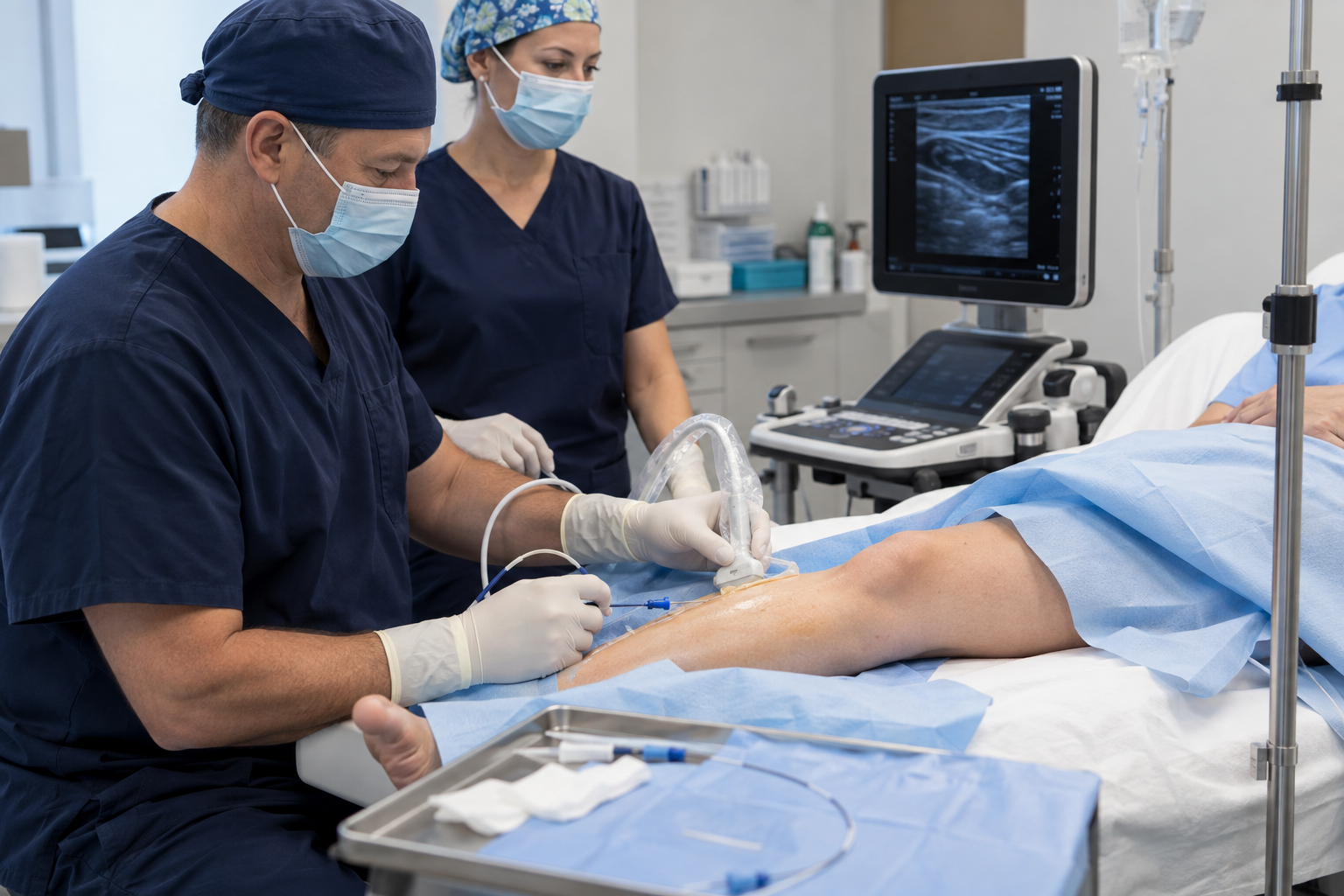
Minimally invasive procedures may be considered when conservative measures aren’t enough or when the evaluation points toward a more significant underlying issue. Options that MVM Health’s Powell clinic may discuss, depending on your evaluation, include:
- Sclerotherapy — a solution injected into the affected vein, causing it to collapse and fade over time, often used for smaller varicose veins and spider veins
- Radiofrequency ablation (RFA) — uses heat energy to close off a problematic vein, redirecting blood flow to healthier veins nearby
- Laser ablation — a similar heat-based approach using laser energy instead of radiofrequency
- VenaSeal — a medical adhesive used to seal a vein shut without heat or multiple injections
- Ambulatory phlebectomy — a minimally invasive technique to remove larger varicose veins through very small incisions
Each of these approaches has different candidacy requirements, and not every option is appropriate for every patient or every vein pattern. The right choice comes out of a diagnostic evaluation, not a preference expressed before that evaluation happens.
Ready to Get Evaluated?
Choosing a vein specialist comes down to two things: verifiable credentials and demonstrated treatment experience. If you’re in the Reading area and ready for a diagnostic evaluation, MVM Health’s Reading team offers vein evaluations and can discuss diagnostic testing, appropriate treatment options, and insurance questions.
What to Expect at Your First Visit to MVM Health in Powell
A first visit to MVM Health’s Powell clinic focuses on evaluation, not immediate treatment, so any next step reflects what’s actually found during your exam rather than an assumption made in advance. A typical first appointment includes:
- A conversation about your symptoms when they started, what you’ve noticed, and any prior vein-related care
- A physical exam of the affected leg(s) to help your provider understand what’s contributing to your symptoms
- A review of your medical history and current medications
- A discussion of next steps, with no treatment assumed or guaranteed before this point
- Time to ask questions about your symptoms, insurance, or any option discussed
Submitting an appointment request online begins the scheduling process, and the team follows up to confirm your visit time. There’s no pressure to decide on the spot patients are welcome to take time considering any recommendation before scheduling further care.
Visiting MVM Health in Powell, Ohio
MVM Health’s Powell clinic is located at 25 Hidden Ravines Dr., Suite A, Powell, OH 43065, and is open Monday through Friday, 8:30 a.m. to 5:00 p.m. The clinic serves patients throughout Powell and the surrounding Delaware and Franklin County area.
If you’ve been noticing leg swelling, visible veins, or ongoing heaviness in your legs, schedule a vein evaluation at MVM Health’s Powell location or call (380) 324-4119 to speak with the team.