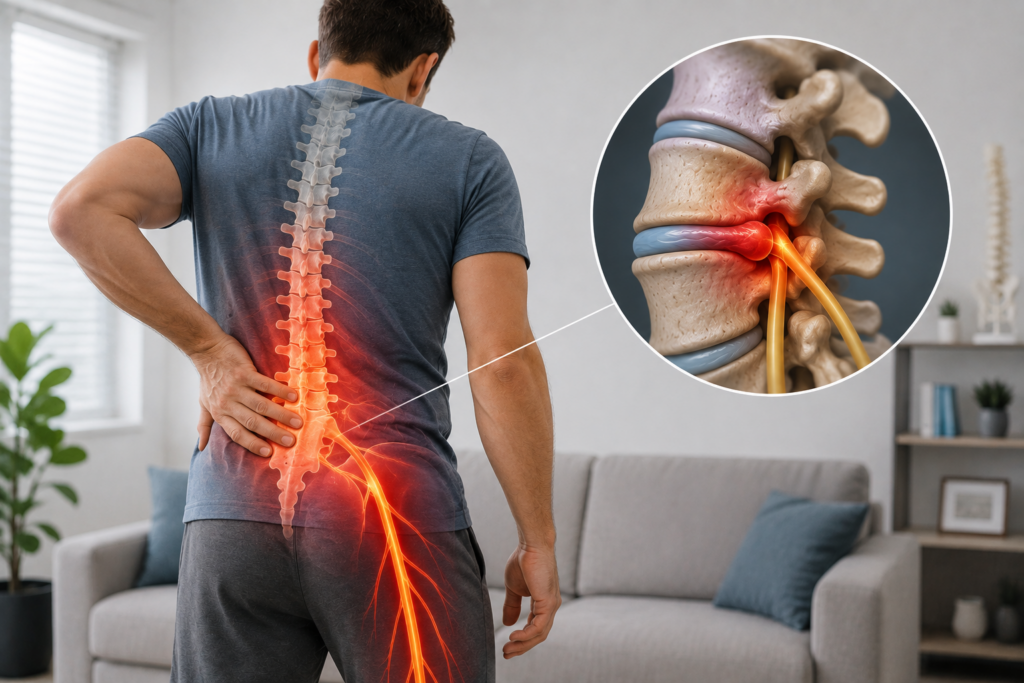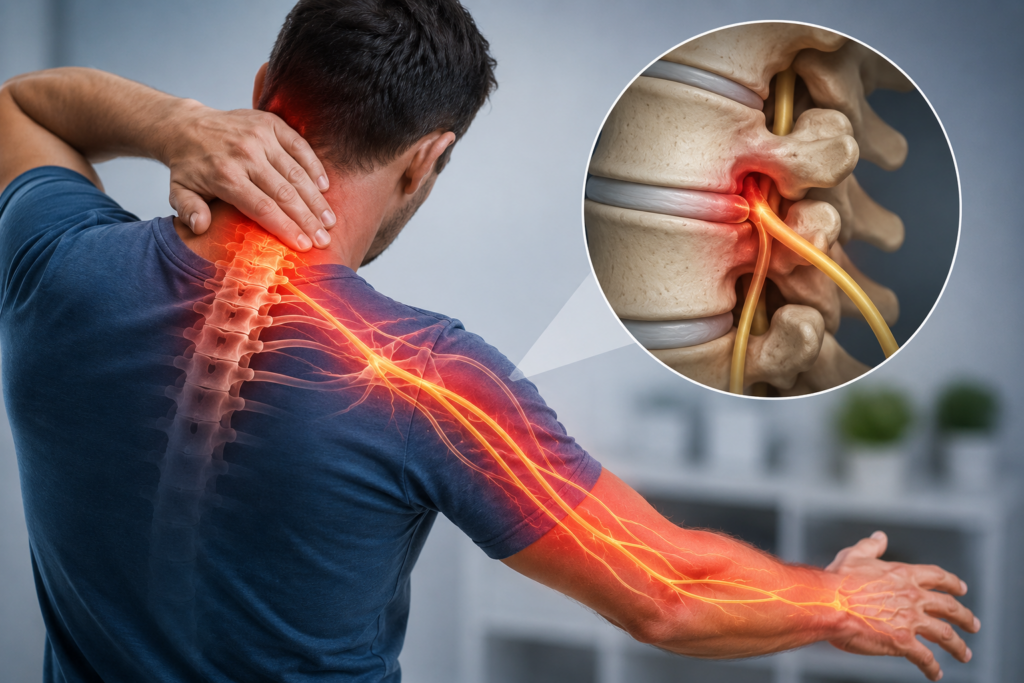


A pain management doctor in New Jersey helps patients make sense of persistent pain when the diagnosis, next step, or value of a proposed treatment is unclear. The goal is to connect symptoms, examination findings, prior treatment results, and functional limitations into a care plan that can be tested and adjusted—not to begin with a predetermined procedure.
MVM Health provides Pain & Spine care through its active New Jersey locations. This guide focuses on how patients can prepare for specialist care, compare treatment paths, recognize a well-supported recommendation, and measure whether a plan is producing meaningful progress.
When Should You Consult a Pain Management Doctor in New Jersey?
Specialist input becomes useful when pain keeps returning, limits normal activity, spreads beyond its starting point, or remains unexplained after initial care. A consultation is also reasonable when medication causes problems, physical therapy has stalled, or a clinician needs help deciding whether imaging or a targeted procedure is appropriate.
Patients may request an evaluation for:
- Persistent lower, middle, or upper back pain
- Neck pain with stiffness or reduced movement
- Pain traveling into an arm or leg
- Burning, electric, shooting, or stabbing pain
- Numbness or tingling
- Pain following an injury or surgery
- Joint or sacroiliac pain
- Symptoms associated with spinal stenosis, arthritis, or a herniated disc
- Pain that continues despite medication, rest, physical therapy, or other initial care
The calendar alone should not determine when care is needed. A recent injury with worsening weakness may require faster assessment than longstanding discomfort that remains stable. Frequency, severity, neurological changes, and loss of function all influence the timing.
Patients who want a broader view can review MVM Health’s pain conditions and treatment pathways before discussing which options may fit an individualized assessment.
Is the Pain Coming From a Muscle, Joint, Disc, or Nerve?
Different tissues can create similar symptoms. The practical question is not simply “What appears on the scan?” but “Which structure best explains the patient’s pattern and limitations?” History and examination help establish that relationship before treatment is selected.
Muscle or connective-tissue pain
Overuse, strain, prolonged posture, deconditioning, or altered movement may irritate muscle and connective tissue. Symptoms often include tightness, tenderness, or an ache that changes as the person moves or rests.
Disc or spinal-joint pain
Discs absorb load between the vertebrae, and facet joints guide motion. Degeneration, a disc tear, herniation, or joint arthritis may produce local pain or irritate a nearby nerve. Because many people have age-related changes without severe symptoms, imaging must be interpreted in context.
Spinal or peripheral nerve pain
Nerve-root irritation may result from disc material, inflammation, or narrowing around the spine. A peripheral nerve can also be affected farther into an arm or leg. Burning, electric pain, tingling, numbness, or weakness makes the neurological examination especially important.
Narrowing around the spinal canal
When space around the spinal cord or nerve roots narrows, symptoms may change with posture and activity. Lumbar narrowing can produce leg heaviness or cramping while walking, while cervical narrowing may sometimes affect balance, hand coordination, or strength.
Pain referred from another condition
Not every painful sensation near the spine begins there. Fracture, infection, inflammatory disease, kidney or vascular problems, tumors, and internal-organ conditions can sometimes refer pain to the back or neck. Findings that suggest these possibilities change the urgency and direction of care.
Which Symptom Patterns Matter During a Pain Evaluation?
Clinicians map symptoms by location, direction, sensation, trigger, and timing. The combination is more useful than any isolated description.
Pain centered in the lower back may arise from muscles, discs, facet joints, or sacroiliac joints. It may change with bending, lifting, standing, or sitting. A back pain specialist in New Jersey may compare these patterns with the range of conditions that can contribute to persistent back pain before recommending treatment.
Neck pain that spreads into an arm and lower-back pain that travels into a leg may suggest nerve involvement. Tingling, numbness, weakness, or burning pain can also originate from a peripheral nerve or systemic condition. Patients with pain traveling from the lower back into a leg can review how sciatica symptoms and treatment options are evaluated, but not all leg pain is sciatica.
Symptoms that worsen with walking but improve when sitting may suggest a different problem from pain aggravated by sitting or bending. These patterns guide the examination but cannot select a procedure without a complete evaluation.
What Happens at the First Pain and Spine Consultation?
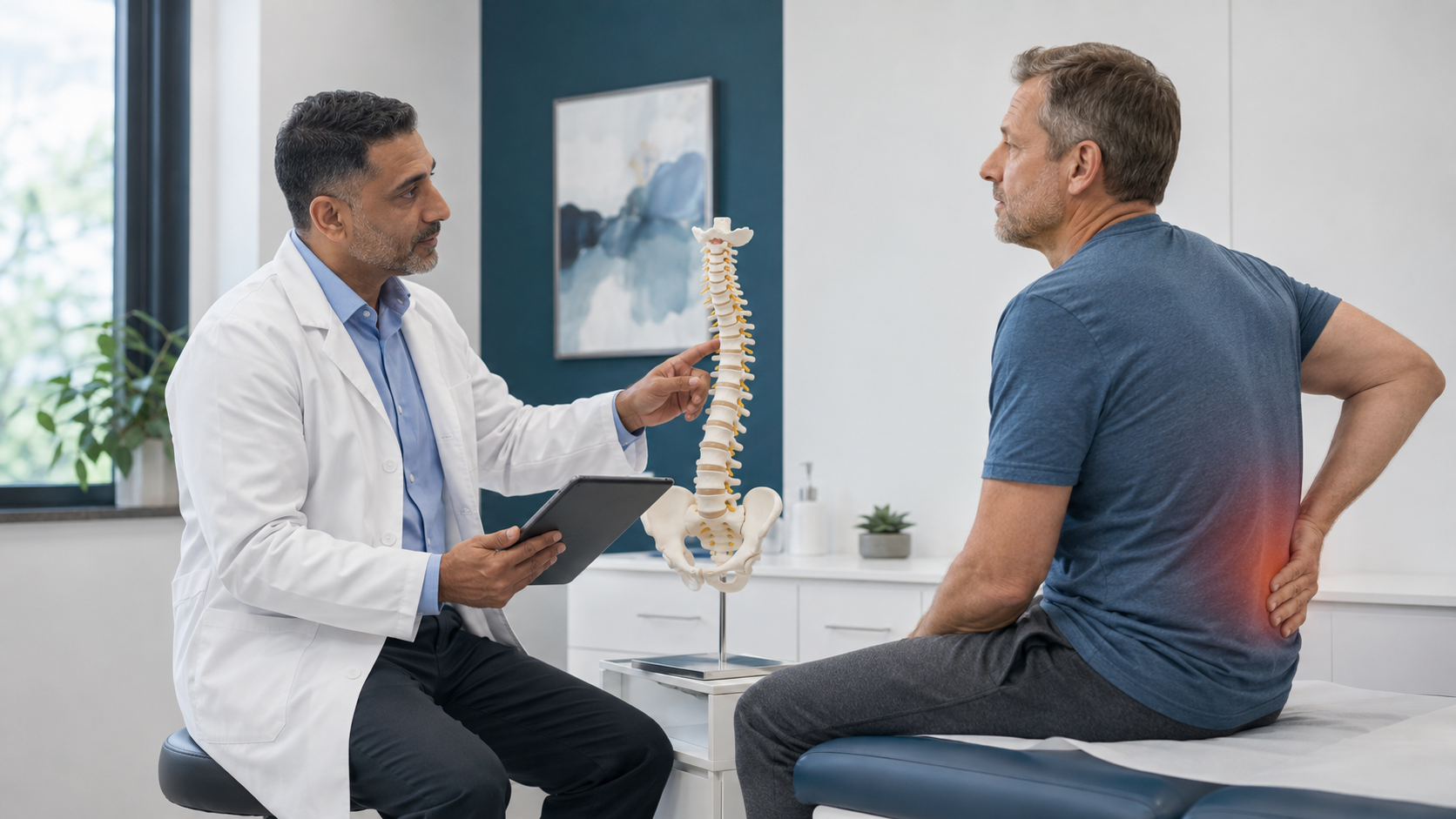
A spine doctor in New Jersey will usually begin by reconstructing the problem: how it started, what has changed, which treatments have been attempted, and what the patient can no longer do comfortably. The visit then connects that history to a focused physical examination and determines whether additional testing would change the plan.
Reconstructing the symptom timeline
The clinician may ask:
- When did the pain start, and was there an injury?
- Where does it begin, and where does it travel?
- What makes it better or worse?
- Has strength, sensation, balance, sleep, or bladder and bowel function changed?
- Which medications, exercises, therapies, or procedures have been tried?
- How does pain affect work, walking, driving, caregiving, or other goals?
Patients should bring an accurate medication list, including nonprescription drugs and supplements. Previous imaging and procedure reports can help the clinician understand what has already been evaluated and how earlier treatments affected symptoms.
Testing movement and neurological function
The clinician may observe gait and posture, check spinal and joint movement, and test strength, sensation, and reflexes. Carefully selected maneuvers can show whether symptoms behave more like a spinal, hip, shoulder, sacroiliac, or peripheral nerve problem.
Deciding whether a test will change care
Tests should answer a specific question. X-rays can assess alignment, fracture, and some degenerative changes. MRI shows greater detail around discs, nerves, the spinal cord, and soft tissue; CT can answer selected bone or postsurgical questions. Electrodiagnostic testing may clarify nerve or muscle function in certain cases.
Not every patient needs immediate imaging. Testing should answer a clinical question and be interpreted alongside the examination. Urgent symptoms may require more immediate imaging or emergency evaluation.
Using a targeted block as additional evidence
A carefully targeted block may test whether a joint or nerve is contributing to symptoms. Clinicians consider how much function and pain changed, how long the response lasted, and whether the result fits the suspected source. It is one piece of evidence, not a guarantee of later treatment success.
Which Treatment Path May Fit the Diagnosis?
Treatment should connect a working diagnosis to a functional goal. The plan may start conservatively, use a targeted intervention to create an opportunity for rehabilitation, or involve another specialist when the findings point outside interventional pain care.
Build capacity through education and rehabilitation
Many plans begin with an explanation of the condition, safe movement, pacing, and progressive rehabilitation. Physical therapy may address mobility, strength, endurance, balance, body mechanics, or gradual return to activity. Recommendations should be adjusted when a fracture, neurological problem, or another serious condition is suspected.

Review medication by pain type and risk
Medication may have a role, but the choice depends on the type of pain, other health conditions, interactions, and previous response. Care should include discussion of expected benefit, possible side effects, safe use, and when treatment should be stopped or reassessed.
The CDC Clinical Practice Guideline for Prescribing Opioids for Pain supports individualized, patient-centered decisions and consideration of nonopioid approaches for many pain conditions.
Target a suspected source with image guidance
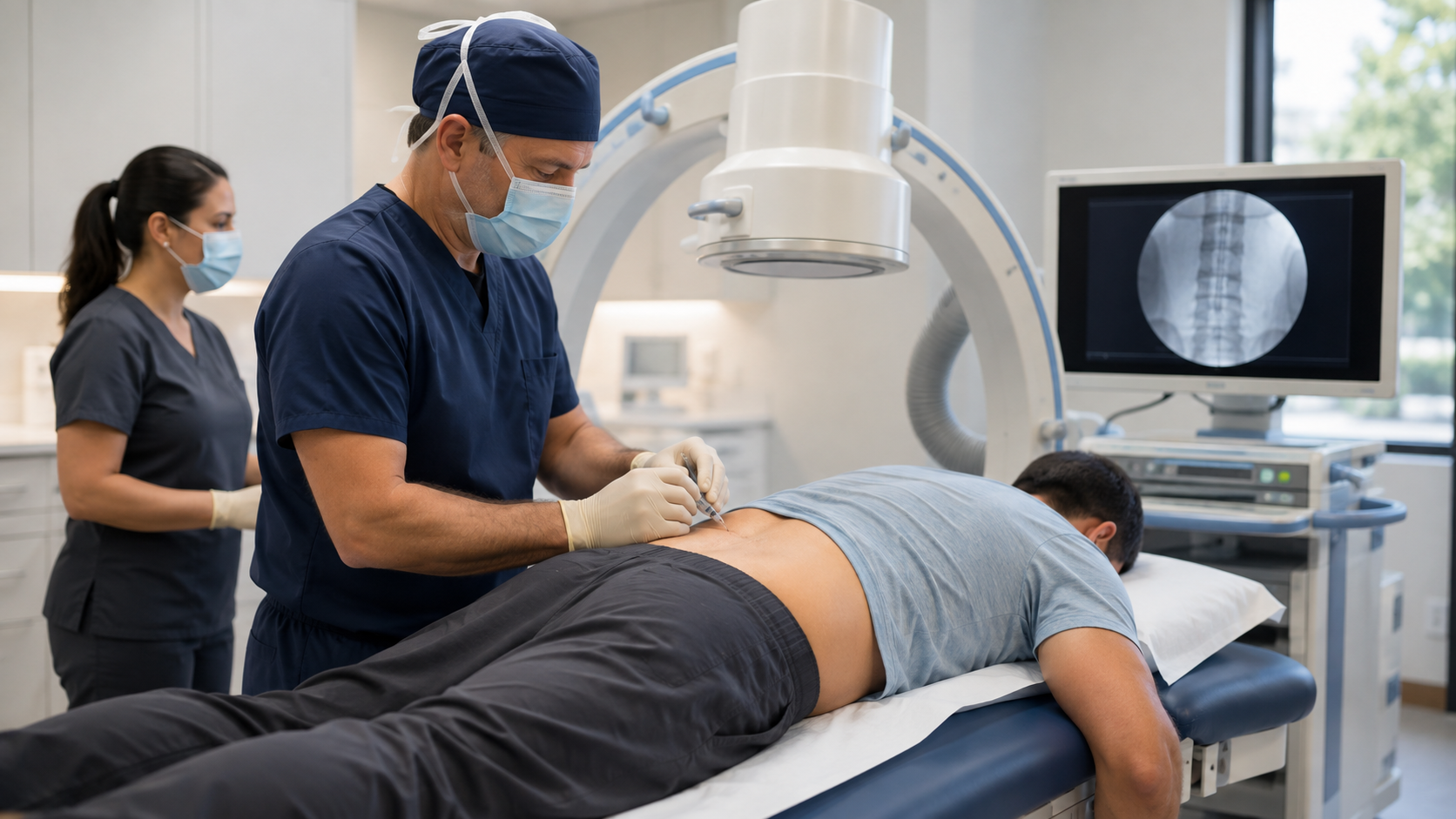
Depending on the diagnosis, options may include an epidural steroid injection, joint injection, nerve block, medial branch block, or sacroiliac joint injection. These procedures have different targets and purposes and should not be treated as interchangeable “pain shots.”
Consider nerve-targeted radiofrequency treatment
Radiofrequency ablation uses controlled energy to interrupt pain signals from selected nerves. In spine care, it may be considered after diagnostic blocks suggest that a facet joint is a likely pain source. It is not appropriate for every form of back or neck pain.
Evaluate neuromodulation for selected nerve pain
Spinal cord stimulation, peripheral nerve stimulation, or dorsal root ganglion stimulation may be considered for selected chronic nerve-pain conditions. These therapies generally require a detailed evaluation and temporary trial before permanent implantation is discussed.
Match a minimally invasive procedure to a defined problem
Selected patients may be evaluated for procedures intended to address a defined structural problem, such as a vertebral compression fracture, lumbar spinal stenosis, sacroiliac joint dysfunction, or another specific condition. Candidacy depends on symptoms, imaging, medical history, and procedural criteria. Treatment availability may vary by location.
Coordinate care when another specialty is needed
Pain management does not replace surgery when urgent or definitive surgical care is appropriate. A clinician may recommend evaluation by spine surgery, neurology, rheumatology, physical medicine and rehabilitation, behavioral health, or another specialty when the findings extend beyond the role of an interventional procedure.
How Do Clinicians Choose Between Rehabilitation, Injections, and Procedures?
The choice depends on the suspected source, severity, functional effect, previous treatment, medical risk, and patient preference. The table organizes the options by purpose rather than presenting a ladder that every patient must climb.
| Treatment category | Main purpose | When it may be considered | Important limitation |
| Education and rehabilitation | Improve movement, strength, confidence, and function | Many mechanical and chronic pain conditions | Progress may be gradual and requires an individualized program |
| Medication management | Reduce symptoms or target a pain mechanism | Short-term flares or selected persistent pain conditions | Side effects, interactions, or limited benefit may require adjustment |
| Image-guided injection | Deliver medication or test a suspected pain source | Selected joint, nerve-root, epidural, or sacroiliac pain patterns | Benefit may be temporary, and the target must match the diagnosis |
| Radiofrequency ablation | Reduce signals from selected sensory nerves | Often after a positive diagnostic block for facet-mediated pain | Not all spinal pain comes from facet joints, and nerves may recover |
| Neuromodulation | Modify pain signaling through electrical stimulation | Selected persistent neuropathic or postsurgical pain | Requires screening, a trial, and ongoing follow-up |
| Minimally invasive procedure | Address a defined structural pain generator | Selected fractures, stenosis, SI-joint, or vertebral conditions | Candidacy depends on symptoms, imaging, health, and procedural criteria |
| Surgical referral | Decompress nerves or stabilize structural disease | Progressive neurological deficit, instability, severe compression, or unsuccessful nonsurgical care | Surgery has condition-specific risks and is not needed for every spine problem |
The target must match the pain generator
An epidural injection may be relevant for one nerve-root problem but unhelpful for pain coming from a facet joint or hip. Radiofrequency ablation may help selected facet-mediated pain but does not repair a herniated disc. Even a technically successful procedure may not improve function if the wrong pain generator was targeted.
The result should be judged by function
Before starting treatment, patients and clinicians should define meaningful goals. Examples include walking farther, sleeping more consistently, returning to work, reducing flare frequency, or completing physical therapy. Functional changes often provide more useful follow-up information than a pain score alone.
What should you plan for before and after a procedure?
The experience depends on the treatment. An outpatient procedure may include medication review, consent, local anesthetic, image guidance, brief monitoring, and written discharge instructions. Ask beforehand about food, transportation, activity, and medication requirements. Do not stop prescribed medication without instructions from the appropriate clinician.
Temporary pressure, stinging, soreness, bruising, numbness, or a short flare may occur with some interventions. Follow the procedure-specific instructions and contact the clinical team for unexpected weakness, fever, drainage, increasing redness, severe headache, loss of bladder or bowel control, or another symptom identified as urgent.
Track changes in pain, medication use, sleep, and activity after treatment. Follow-up helps determine whether to continue rehabilitation, adjust medication, order another test, or consider a different procedure or referral.
Which Warning Signs Should Not Wait for a Routine Appointment?
Most back and neck complaints can be addressed through a scheduled visit, but some symptoms require faster action. The deciding issue is not pain intensity alone; a new neurological loss, serious trauma, systemic illness, or another emergency feature can change the response.
A pain management doctor in New Jersey may also help when the diagnosis remains uncertain, several treatments have been unsuccessful, medication side effects are a concern, or a primary care clinician recommends specialist evaluation. The appropriate nerve pain treatment in New Jersey depends on whether symptoms originate from a spinal nerve root, peripheral nerve, spinal cord, or another medical condition.
Warning signs requiring urgent medical attention
Seek urgent medical evaluation for:
- New or progressive weakness in an arm or leg
- New loss of bladder or bowel control
- Numbness around the groin, buttocks, or inner thighs
- Severe pain following a major fall, crash, or other trauma
- Back or neck pain with fever, confusion, or significant illness
- Sudden severe headache or neck pain with neurological symptoms
- Pain with chest pressure, shortness of breath, fainting, or stroke-like symptoms
Call 911 for life-threatening symptoms. A routine online appointment request is not appropriate for an emergency.
Symptoms that deserve timely review
Persistent pain accompanied by unexplained weight loss, a history of cancer, osteoporosis, immune suppression, long-term steroid use, or recent infection should be discussed promptly. Night pain alone does not establish a diagnosis, but a new pattern that is severe, progressive, or accompanied by systemic symptoms needs assessment.
Ready to Discuss Your Symptoms and Treatment Goals?
Request a New Jersey pain consultation so the MVM Health team can review your appointment request and help identify an appropriate location and next step. Appointment availability and treatment recommendations require confirmation.