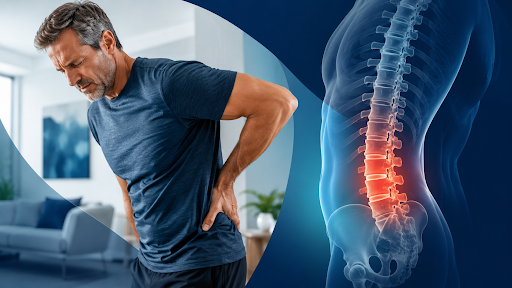


A pain management doctor in Pennsylvania evaluates persistent back, neck, or nerve pain by looking for its likely source, measuring how it affects function, and matching treatment to the diagnosis. Care may include rehabilitation, medication review, image-guided injections, nerve-targeted procedures, minimally invasive spine treatments, or coordination with another specialist; the right plan depends on the individual rather than a standard procedure list.
MVM Health provides Pain & Spine care through its active Pennsylvania locations, where patients can request an evaluation for back, neck, and nerve pain.
What Types of Pain Does a Pain Management Doctor in Pennsylvania Evaluate?
Pain management focuses on more than the intensity of a symptom. It examines where pain begins, how it travels, which movements affect it, whether nerves are involved, and how the problem limits sleep, work, walking, exercise, or daily activities.
Patients may seek an evaluation for:
- Persistent lower, middle, or upper back pain
- Neck pain with stiffness or reduced motion
- Pain that travels into an arm or leg
- Burning, electric, shooting, or stabbing nerve pain
- Numbness or tingling
- Pain after surgery or injury
- Joint or sacroiliac pain
- Pain associated with spinal stenosis, a herniated disc, arthritis, or another spine condition
- Pain that has continued despite medication, rest, physical therapy, or other initial care
Pain can be acute, recurring, or chronic. Duration matters, but so do severity, neurological symptoms, functional decline, and the suspected cause. A person does not always need to wait a fixed number of weeks before asking for help, particularly when symptoms are worsening or affecting strength, balance, or basic activity.
MVM Health provides nerve pain treatment in Pennsylvania based on the patient’s symptoms, examination findings, diagnosis, and treatment goals.
What Can Cause Back, Neck, and Nerve Pain?
Back and neck pain can begin in muscles, ligaments, joints, discs, vertebrae, or nerves. Imaging findings are not the diagnosis by themselves: some structural changes caus e symptoms, while others may be incidental. The clinician must compare the history, examination, and any tests to determine which finding is clinically meaningful.
Common categories include:
Muscle, ligament, and soft-tissue pain
Strains, repetitive activity, prolonged positioning, poor movement mechanics, or deconditioning may irritate muscles and connective tissues. This pain may feel sore, tight, or tender and often changes with activity.
Disc and spinal-joint conditions
Discs cushion the vertebrae, while facet joints guide spinal movement. Degenerative changes, disc tears, herniation, or joint arthritis may cause localized pain or contribute to nerve irritation. These findings need clinical interpretation because similar scan results can produce very different symptoms in different people.
Nerve compression or irritation
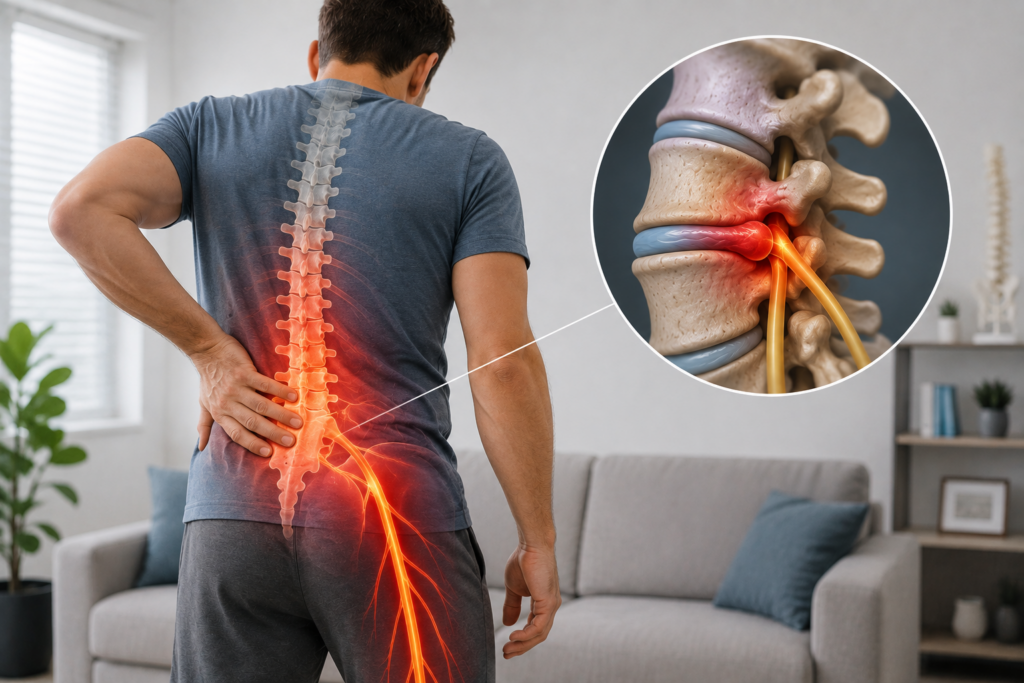
A nerve root may be irritated by a herniated disc, spinal narrowing, inflammation, or another structural problem. Symptoms can travel along a recognizable path and may include burning, tingling, numbness, or weakness. Sciatica is a common term for pain that follows the sciatic nerve pathway into the buttock or leg.
Spinal stenosis
Spinal stenosis is narrowing around the spinal cord or nerve roots. In the lower back, it may cause leg pain, heaviness, numbness, or cramping during standing or walking that improves with sitting or leaning forward. In the neck, significant narrowing can sometimes affect balance, hand coordination, or limb strength.
Other medical causes
Kidney problems, infection, inflammatory disease, vascular conditions, osteoporosis-related fractures, tumors, and disorders of internal organs can sometimes present as back or neck pain. These causes are less common than routine musculoskeletal problems but are important when the history or examination raises concern.
How Can Pain Symptoms Help Identify the Possible Source?
The location and quality of pain offer useful clues, but no single symptom confirms a diagnosis.
Back pain without leg symptoms
Pain centered in the lower back may arise from muscles, discs, facet joints, or sacroiliac joints. It may be aggravated by bending, lifting, twisting, standing, sitting, or changing positions. A back pain specialist in Pennsylvania may evaluate several conditions that can produce overlapping symptoms.
Neck pain with arm symptoms
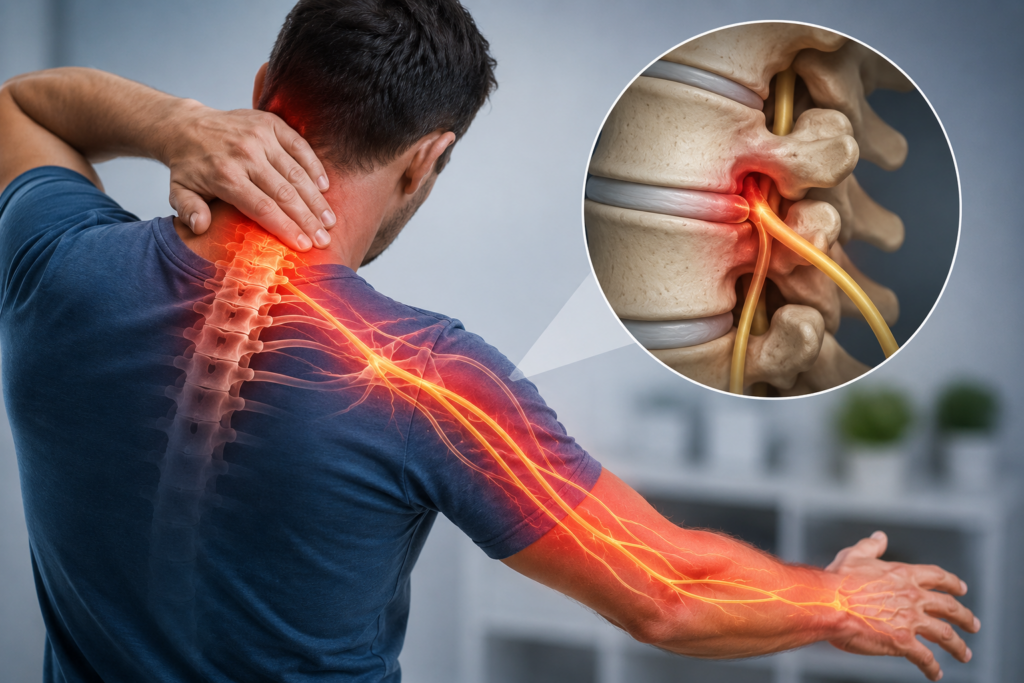
Neck pain may stay localized or travel into the shoulder, arm, or hand. Tingling, numbness, or weakness can suggest nerve involvement, although shoulder disorders and peripheral nerve problems may produce similar symptoms.
Radiating leg pain
Pain traveling from the lower back or buttock into the leg may fit a radicular or sciatic pattern. The exact path, triggers, sensory changes, reflexes, and strength findings help the clinician identify which nerve may be involved. The sciatica treatment overview provides additional information about possible causes and treatment categories.
Burning, tingling, or electric pain
These descriptions may point toward neuropathic pain, but nerve pain can originate at the spine, in a peripheral nerve, or from a systemic condition. Diabetes, prior surgery, shingles, chemotherapy, trauma, and nerve entrapment are among the possibilities a clinician may consider.
Pain that changes with position or activity
Symptoms that worsen with walking but ease when sitting can differ from pain that worsens with sitting or bending. Pain during a specific movement may help guide the examination, but it is not enough to select an injection or procedure without a fuller evaluation.
How is Persistent Pain Diagnosed?
Diagnosis is a process, not a single scan. A pain specialist may combine the medical history, physical examination, prior records, imaging, and—when appropriate—diagnostic procedures to determine which structure is most likely generating the pain.
Medical History
The clinician may ask:
- When did the pain begin, and was there an injury?
- Where does it start, and where does it travel?
- What makes it better or worse?
- Are there changes in strength, sensation, balance, sleep, or bladder and bowel function?
- Which medications, exercises, therapies, or procedures have already been tried?
- How does pain affect work, caregiving, walking, driving, or other goals?
Bring an accurate medication list, including over-the-counter drugs and supplements. Previous procedure reports and imaging—not only the radiology summary—can also help avoid repeating tests or treatments that did not address the problem.
Physical and neurological examination
The examination may assess posture, spinal motion, tenderness, gait, joint movement, muscle strength, sensation, and reflexes. Specific maneuvers can increase or reduce certain symptoms and help distinguish spinal pain from hip, shoulder, sacroiliac, or peripheral nerve problems.

Imaging and other tests
X-rays show bone alignment, fractures, and some degenerative changes. MRI can provide more detail about discs, nerves, the spinal cord, and soft tissues, while CT may be useful for selected bone or postsurgical questions. Electrodiagnostic testing may help evaluate nerve or muscle function in certain cases.
Not everyone needs immediate imaging. Testing should answer a clinical question and be interpreted alongside the examination. If urgent warning signs are present, however, timely imaging or emergency evaluation may be necessary.
Diagnostic injections
Some injections are used partly to test whether a particular joint or nerve is the source of pain. The amount and duration of change after a carefully targeted diagnostic block can inform the next step. A temporary response does not guarantee that a later treatment will provide the same degree or duration of benefit.
What Pain Treatment Options May be Considered?
The goal is not simply to lower a pain score for a few hours. A useful plan should improve function, support safe activity, reduce avoidable treatment risk, and address the most likely pain generator.
Education, activity, and rehabilitation
Many plans begin with an explanation of the condition, safe movement, pacing, and a progressive rehabilitation strategy. Physical therapy may focus on mobility, strength, endurance, balance, body mechanics, or gradual return to activity. Bed rest is rarely a long-term solution for routine mechanical pain, but activity recommendations should be adjusted when fracture, neurological compromise, or another serious condition is suspected.

Medication review
Medication may play a role, but the choice depends on the pain type, other health conditions, possible interactions, and previous response. Options may include nonprescription medicines, selected prescription drugs, topical treatments, or medications used for neuropathic pain.
Pain care should include a discussion of expected benefit, side effects, safe use, and when to stop or reassess a medication. The CDC Clinical Practice Guideline for Prescribing Opioids for Pain emphasizes individualized, patient-centered decisions and consideration of nonopioid approaches for many pain conditions.
Image-guided injections
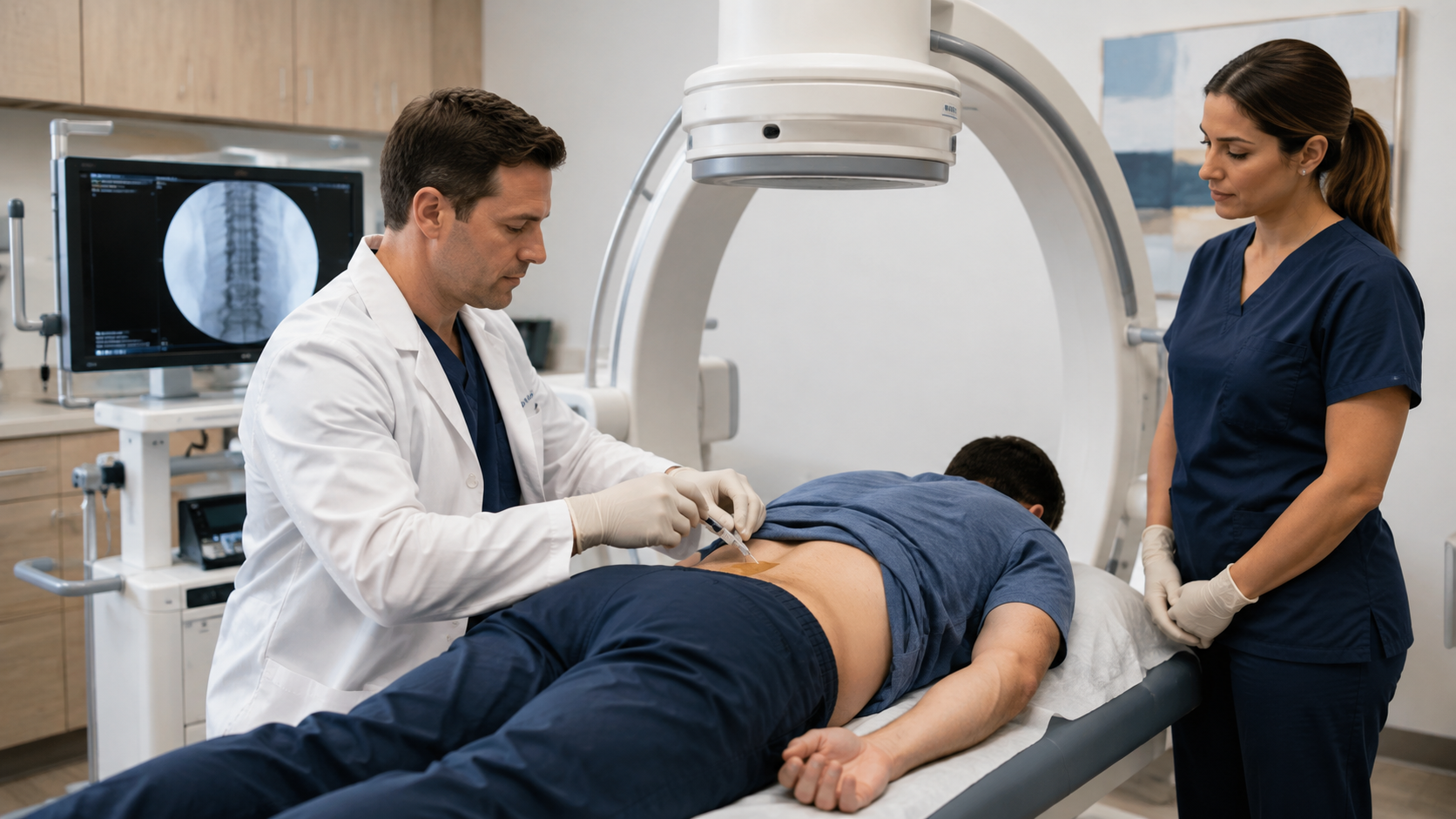
Depending on the diagnosis, a clinician may consider an epidural steroid injection, joint injection, nerve block, medial branch block, or sacroiliac joint injection. These procedures have different targets and purposes. They should not be grouped together as interchangeable “pain shots.”
Radiofrequency ablation
Radiofrequency ablation uses controlled energy to interrupt pain signals from selected nerves. In spine care, it is often considered only after diagnostic medial branch blocks suggest that a facet joint is a likely pain source. It is not a treatment for every form of back or neck pain.
Neuromodulation
Spinal cord stimulation, peripheral nerve stimulation, or dorsal root ganglion stimulation may be considered for selected chronic nerve-pain conditions. These therapies typically require careful evaluation and a temporary trial before permanent implantation is discussed.
Minimally invasive spine procedures
Selected patients may be evaluated for procedures intended to address vertebral compression fractures, lumbar spinal stenosis, sacroiliac joint dysfunction, vertebral endplate pain, or other specific structural problems. Procedure availability and candidacy vary by location, diagnosis, imaging, health status, and insurer requirements.
Coordinated surgical or specialty referral
Pain management is not a substitute for surgery when urgent or definitive surgical care is appropriate. A clinician may refer a patient to spine surgery, neurology, rheumatology, physical medicine and rehabilitation, behavioral health, or another specialty when the evaluation points beyond the scope of an interventional pain procedure.
Considering a Pennsylvania Pain Evaluation?
A consultation can help clarify which symptoms require imaging, rehabilitation, medication review, an interventional option, or another referral. MVM Health can review prior records and discuss a plan based on the diagnosis rather than a generic procedure menu. An appointment request is subject to confirmation by the care team.
How are Different Pain Treatments Compared?
The table below shows how broad treatment categories differ. It does not rank treatments or establish which option is appropriate for an individual patient.
| Treatment category | Main purpose | When it may be considered | Important limitation |
| Education and rehabilitation | Improve movement, strength, confidence, and function | Many mechanical and chronic pain conditions | Progress may be gradual and requires an individualized program |
| Medication management | Reduce symptoms or target a pain mechanism | Short-term flares or selected persistent pain conditions | Side effects, interactions, and limited benefit may require adjustment |
| Image-guided injection | Deliver medication or test a suspected pain source | Selected joint, nerve-root, epidural, or sacroiliac pain patterns | Benefit may be temporary; the target must match the diagnosis |
| Radiofrequency ablation | Reduce pain signals from selected sensory nerves | Often after a positive diagnostic block for facet-mediated pain | Nerves can recover, and not all spinal pain comes from facet joints |
| Neuromodulation | Modify pain signaling through electrical stimulation | Selected persistent neuropathic or postsurgical pain | Requires screening, a trial, and ongoing device follow-up |
| Minimally invasive spine procedure | Address a defined structural pain generator | Selected fractures, stenosis, SI-joint, or vertebral conditions | Candidacy depends on imaging, symptoms, health, and procedural criteria |
| Surgical referral | Decompress nerves or stabilize/correct structural disease | Progressive neurological deficit, instability, severe compression, or failed appropriate nonsurgical care | Surgery has condition-specific risks and is not required for every spine problem |
Why the diagnosis matters more than the procedure name
An epidural injection may be relevant for one nerve-root problem but unhelpful for pain arising from a facet joint or hip. Radiofrequency ablation may help selected facet-mediated pain but does not repair a herniated disc. A treatment can be technically successful and still fail to improve the patient if the wrong pain generator was targeted.
Why goals should be measurable
Before treatment, define what improvement would matter. Goals might include walking farther, sleeping more consistently, returning to work, reducing flare frequency, or completing physical therapy. These functional measures often provide more useful follow-up information than a pain score alone.
What Should Patients Expect During Treatment and Recovery?
The details vary, but an outpatient procedure may include check-in, medication review, consent, confirmation of the target and side, positioning, skin preparation, local anesthetic, image guidance, treatment, monitoring, and written discharge instructions.
Ask in advance whether you need to pause food, drink, or any medication. Do not stop anticoagulants, diabetes medication, or other prescribed drugs without instructions from the treating clinician and, when needed, the prescribing doctor.
What a procedure may feel like
Patients may feel pressure, brief stinging from numbing medication, reproduction of a familiar symptom, or temporary soreness. Sedation is not required for every procedure and can affect transportation and activity restrictions. The clinical team should explain the expected experience before consent.
What recovery may involve
Temporary soreness, bruising, numbness, or a short flare can occur after some interventions. Activity recommendations differ: walking may be encouraged, while driving, lifting, bathing, exercise, or return to work may be limited for a defined period.
Follow the instructions provided for the specific procedure. Contact the clinical team for unexpected weakness, fever, drainage, severe headache, increasing redness, loss of bladder or bowel control, or symptoms that were identified as urgent in the discharge plan.
How follow-up guides the next decision
Track pain intensity, location, medication use, sleep, and functional change after treatment. A pain diary can help distinguish an immediate anesthetic response from a later therapeutic effect. Follow-up should decide whether to continue rehabilitation, adjust medication, repeat or avoid a procedure, order another test, or consider a different referral.
When Should You See a Doctor for Back, Neck, or Nerve pain?
Schedule an evaluation when pain persists, repeatedly returns, interferes with sleep or activity, travels into an arm or leg, or is associated with numbness or tingling. Earlier assessment may also be appropriate after an injury, when symptoms are worsening, or when initial treatment has not produced meaningful improvement.
A pain management doctor in Pennsylvania can help when the diagnosis remains uncertain, several treatments have failed, medication side effects are a concern, or a primary clinician recommends specialist-level evaluation.
Warning signs that need urgent medical attention
Seek urgent medical evaluation for:
- New or progressive weakness in an arm or leg
- New loss of bladder or bowel control
- Numbness around the groin, buttocks, or inner thighs
- Severe pain after a major fall, crash, or other trauma
- Back or neck pain with fever, confusion, or significant illness
- Sudden severe headache or neck pain with neurological symptoms
- Pain accompanied by chest pressure, shortness of breath, fainting, or stroke-like symptoms
Call 911 for life-threatening symptoms. These warning signs cannot be assessed safely through a routine online appointment request.
Symptoms that deserve timely-not emergency—review
Persistent pain with unexplained weight loss, a history of cancer, osteoporosis, immune suppression, long-term steroid use, or recent infection should be discussed promptly. Night pain alone is not diagnostic, but a new pattern that is severe, progressive, or accompanied by systemic symptoms needs assessment.